Alabaster Box Value Guide
- Period
- 1950-1970
- Origin
- Italy
- Materials
- alabaster
- Category
- Alabaster
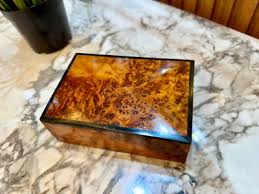
These mid-century Italian alabaster boxes, particularly those by makers like NOYMER, represent a long tradition of stone carving dating back to ancient Egypt and the Renaissance. Highly collectible for their natural translucency and smooth polished finish, they served as elegant 20th-century souvenirs that showcase genuine Italian craftsmanship.
What Is Alabaster Box Worth?
The typical price range for Alabaster Box is $100 - $150 based on recent sales. However, values can vary depending on the item's condition, rarity, and other factors such as:
- Presence and condition of the original manufacturer's labels, which verify the Italian origin and material authenticity.
- The complexity of the veining and the rarity of the stone color, with deeper or more vibrant hues often commanding higher prices.
- Physical condition, specifically the absence of chips or scratches in the soft mineral surface which is prone to damage.
- The integrity of the hinges and hardware, ensuring they are original to the 1950-1970 production period.
How to Identify Alabaster Box?
- Look for the original gold and black foil labels stating 'Real Alabaster Made in Italy' or specific branding like 'NOYMER'.
- Verify the material's translucency by holding it to a light source; genuine alabaster should allow a soft glow to pass through the stone.
- Check for natural veining and color variations, as real alabaster will not have the perfectly symmetrical patterns found in resin imitations.
- Assess the weight and temperature; authentic stone feels heavy for its size and remains cool to the touch.
History of Alabaster Box
Alabaster, a soft and translucent mineral, has been used for carving decorative objects since ancient times. Its subtle beauty and workability made it a favorite material for artisans in various cultures, including ancient Egypt, Mesopotamia, and Rome. Italian alabaster, in particular, became renowned for its quality and was extensively used for sculptures, vessels, and architectural details during the Renaissance and beyond. Boxes like this one, often produced by companies such as NOYMER, became popular in the mid-20th century as charming and elegant home decor items, frequently purchased as souvenirs or gifts. The NOYMER brand, known for its "Real Alabaster Made in Italy" label, signifies a commitment to traditional Italian craftsmanship using genuine stone.
Shop Similar
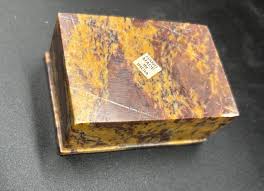
Vintage Handmade Soapstone Trinket Dish With Ship …
etsy.com · $14
Burl wooden box Organizer Keepsake Box gift box de…
ebay.com · $60
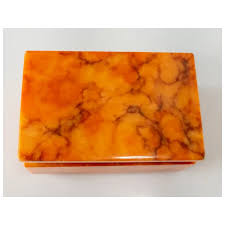
Vintage Mid-Century Modern Orange Alabaster Trinke…
rubylane.com · $225
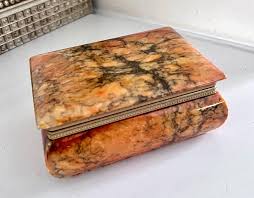
Alabaster Box with Brass Trim | Chairish
chairish.com · $276
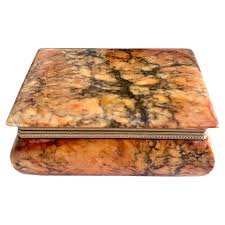
Alabaster Box with Brass Trim For Sale at 1stDibs
1stdibs.com · $400
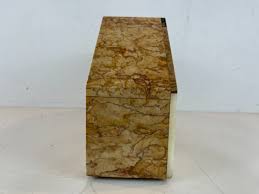
Antique Art Deco French Multicolored Marble Decora…
ebay.com · $425
Related Items
Have an antique to identify?
Get an instant AI appraisal with values, history, and market insights.
Download for iPhone