Bidriware Vase Value Guide
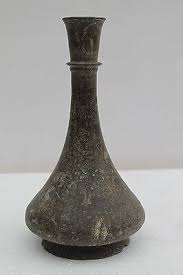
- Period
- 19th century
- Origin
- India
- Materials
- zinc alloy or brass base, silver inlay, blackened patina
- Category
- Bidriware
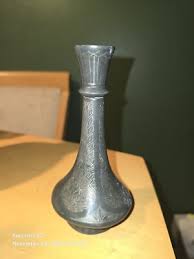
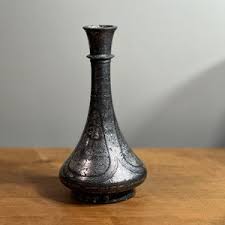
This 19th-century Bidriware vase represents a prestigious metalworking tradition from Bidar, India, characterized by its striking contrast between silver inlay and a dark, patinated zinc-alloy base. Highly prized during the Mughal era, these tall, narrow-necked vessels are sought after by collectors for their intricate geometric and floral motifs that reflect Indo-Islamic artistry.
What Is Bidriware Vase Worth?
The typical price range for Bidriware Vase is $125 - $225 based on recent sales. However, values can vary depending on the item's condition, rarity, and other factors such as:
- The complexity and density of the silver-inlaid floral or geometric patterns significantly impact the final price.
- Structural integrity is key; vases with original narrow necks intact and no dents in the zinc-alloy body command higher values.
- The preservation of the deep black patina, which can be damaged by improper cleaning or harsh chemicals, is essential for maximum value.
- Provenance and age, specifically pieces dating to the 19th century versus modern reproductions, determine the $125-$225 price bracket.
How to Identify Bidriware Vase?
- Look for the characteristic matte black finish created by a specific soil paste from the Bidar Fort, which oxidizes the zinc alloy while leaving the silver bright.
- Examine the inlay for 'Tehni-shan' (deeply embedded silver wire) or 'Aftabi' (cut-out silver sheets) techniques common in 19th-century craftsmanship.
- Verify the base metal is a heavy zinc-copper alloy rather than lightweight painted tin or modern cast iron.
- Check for authentic age-related wear, such as slight tarnishing of the silver and a smooth, hand-polished feel to the dark surface.
History of Bidriware Vase
Bidriware is a metalcraft tradition originating in Bidar, India, from the 14th–17th centuries and flourishing under the Deccan Sultanates and Mughal influence. Artisans create a blackened alloy body and inlay silver or brass to form intricate designs. Pieces were prized across South Asia and by European collectors; the technique remains practiced today with both antique and contemporary examples.
Shop Similar
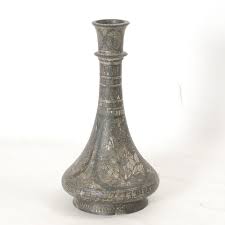
Persian Or Indian Bidri Ware Vase. – Seaver & McLe…
seaverandmclellanantiques.com · $125
Antique Old Hand Crafted Iron Engraved Bidri Silve…
ebay.com · $229
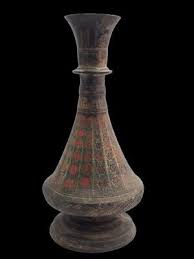
Very rare islamic mughal hand engraved brass pot w…
ebay.com · $350
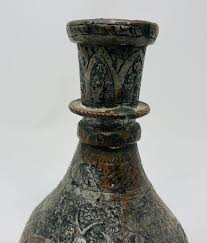
19th Century Tinned Copper Indo-Persian Islamic Va…
1stdibs.com · $450
Antique Hand Carved Silver Inlay Bidri Work Mughal…
ebay.com
Peekdaan - Etsy
etsy.com
Related Items
Have an antique to identify?
Get an instant AI appraisal with values, history, and market insights.
Download for iPhone