Bohemian Green Glass Decanter Value Guide
- Period
- 1880-1920
- Origin
- Bohemia (now Czech Republic)
- Materials
- glass, enamel paint
- Category
- Bohemian glass
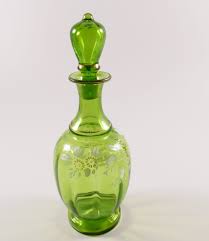
This Bohemian Green Glass Decanter is a prime example of late 19th-century artistry, featuring a deep emerald hue and intricate hand-painted enamel floral motifs. Produced in the historic glassmaking regions of the Czech Republic, these vessels were highly prized across Europe for serving liqueurs and perfumes.
What Is Bohemian Green Glass Decanter Worth?
The typical price range for Bohemian Green Glass Decanter is $120 - $180 based on recent sales. However, values can vary depending on the item's condition, rarity, and other factors such as:
- The condition of the enamel painting, as significant wear or loss of the floral motifs can reduce the value.
- The presence of the original, undamaged round stopper is critical for achieving the full $120-$180 price range.
- The complexity of the hand-blown shape, including any artisanal ribbing or unique structural variations.
- Overall glass clarity and the absence of chips, cracks, or 'sick glass' cloudiness.
How to Identify Bohemian Green Glass Decanter?
- Look for a hand-blown finish, often indicated by a pontil mark on the base or slight variations in the glass thickness.
- Examine the enamel floral decoration for raised texture, which signifies hand-applied paint rather than modern printed transfers.
- Verify the presence of a matching round glass stopper, which should fit snugly and show similar wear patterns to the decanter neck.
- Check for the characteristic deep emerald green color typical of Bohemian glass workshops from the 1880-1920 era.
History of Bohemian Green Glass Decanter
Bohemian glassmaking in the 19th century produced richly colored, hand-blown and hand-decorated glassware prized across Europe. Green glass decanters with applied stoppers and enamel floral painting were especially popular during the late 1800s and early 1900s for serving liqueurs and perfumes. Small variations in shape, ribbing, and painted motifs reflect artisanal workshop production rather than mass manufacture, making surviving examples collectible.
Shop Similar
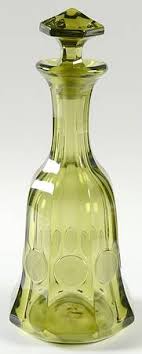
Fostoria, Coin Glass Olive Green | Replacements, L…
replacements.com · $40
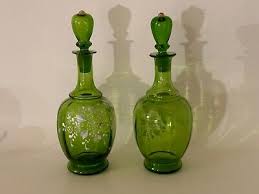
Antique Pair Moser Perfume Bottles Hand Blown H/Pa…
ebay.com · $85
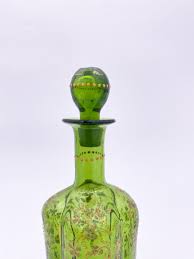
Green and Gold Embellished Glass Bottle – Objects …
objectsinanimate.com · $97
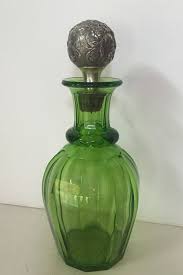
Antique Emerald Green Cut Glass Decanter: Repousse…
etsy.com · $101
Böhmen Flakon grünes Glas handbemalt weißen Blumen…
ebay.com · €130
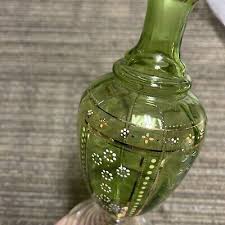
ANTIQUE BOHEMIAN MOSER TYPE DECORATED GLASS VASE 8…
ebay.com · $375
Related Items
Have an antique to identify?
Get an instant AI appraisal with values, history, and market insights.
Download for iPhone