Burmese Silver Repousse Bowl Value Guide
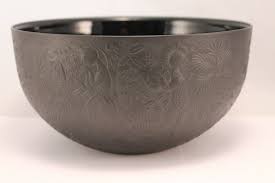
- Period
- 1900-1920
- Origin
- Burma
- Materials
- Silver
- Category
- Burmese silver
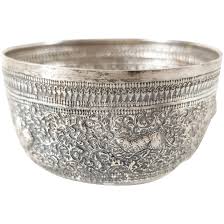
This antique Burmese silver bowl showcases the mastery of early 20th-century silversmiths through the labor-intensive repoussé technique. These pieces are highly collectible for their high-relief floral and foliate motifs, which served both ceremonial purposes and as status symbols in Burmese households.
What Is Burmese Silver Repousse Bowl Worth?
The typical price range for Burmese Silver Repousse Bowl is $275 - $275 based on recent sales. However, values can vary depending on the item's condition, rarity, and other factors such as:
- The complexity and depth of the repoussé work, specifically the detail in the floral and foliate carvings.
- Physical condition, including the absence of cracks in the high-relief areas or excessive wear to the fine details.
- The total weight of the silver and the overall dimensions of the bowl.
- Historical provenance and the presence of any maker's marks or regional signatures.
How to Identify Burmese Silver Repousse Bowl?
- Look for deep, three-dimensional relief patterns hammered from the reverse side, characteristic of the 1900-1920 era.
- Examine the exterior for dense, overlapping floral and foliate designs that cover the majority of the bowl's surface.
- Check for the weight and patina consistent with high-grade silver used in traditional Burmese metalwork.
- Identify hand-hammered tool marks on the interior that correspond to the raised exterior patterns.
History of Burmese Silver Repousse Bowl
Repoussé is a metalworking technique where a malleable metal is shaped by hammering from the reverse side to create a design in relief. This ancient technique has been used for centuries across various cultures, with Burmese silversmiths excelling in creating highly detailed pieces, often depicting mythological scenes, flora, and fauna. These bowls were frequently used for ceremonial purposes or as decorative household items, showcasing the artisan's skill and the cultural narratives of the region.
Shop Similar
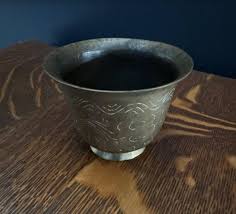
Small Carved Brass Bowl - Sea Serpent Design - Mad…
etsy.com · $18
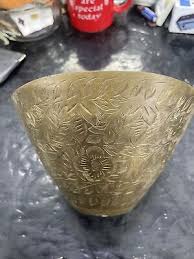
Vintage Brass flower pot India 701ES | eBay
ebay.com · $20
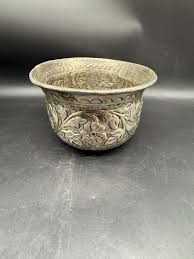
Silver Planter Flowers and Vine Embossed Home Deco…
etsy.com · $75
South East Asian Thai Burmese Silver Repousse Bowl…
rubylane.com · $225
Bjorn Winblad Rosenthal Whimsical Porcelain Black …
ebay.com · $325
Bjorn Winblad Rosenthal Whimsical Porcelain Black …
ebay.com · $326
Have an antique to identify?
Get an instant AI appraisal with values, history, and market insights.
Download for iPhone