Charleston Slave Badge Value Guide
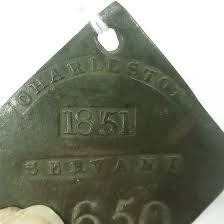
- Period
- 1841
- Origin
- United States of America
- Materials
- Copper
- Category
- Historical badge
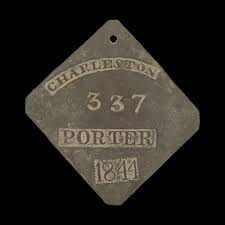
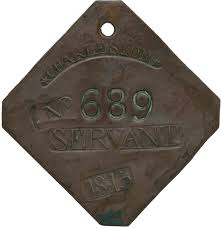
This 1841 Charleston Slave Badge is a somber artifact from the only municipal licensing system of its kind in the American South. These clipped-corner copper diamonds served as physical proof of tax payment for enslaved individuals hired out as laborers, representing a chilling intersection of bureaucracy and human commodification.
What Is Charleston Slave Badge Worth?
The typical price range for Charleston Slave Badge is $1,800 - $1,980 based on recent sales. However, values can vary depending on the item's condition, rarity, and other factors such as:
- The specific trade listed on the badge, with rarer occupations like 'Fruiterer' often commanding higher prices.
- The overall condition of the copper, including the legibility of the year, number, and city name.
- The historical provenance and documentation linking the piece to the Charleston municipal tax system.
- Current market demand for authentic antebellum artifacts, with values for this year ranging from $1,800 to $1,980.
How to Identify Charleston Slave Badge?
- Verify the clipped-corner diamond shape specific to the copper tags issued in Charleston, South Carolina.
- Check for the stamped year '1841' and a unique registration number assigned by the city.
- Look for specific trade designations such as Porter, Servant, Mechanic, or Fruiterer stamped into the metal.
- Examine the copper for authentic age-related patina and the characteristic hand-stamped lettering of the era.
History of Charleston Slave Badge
Charleston was the only city in the South to implement a formal municipal system for licensing and tagging enslaved workers. From 1800 to 1865, owners who 'hired out' their enslaved people were required to pay a tax and obtain these badges, which specified the person's trade—such as Porter, Servant, Mechanic, or Fruiterer—and a registration number. These artifacts serve as chilling evidence of the commodification of human life in the antebellum era.
Shop Similar
Lot - Rare Charleston slave tag, descended in Gour…
charltonhallauctions.com · $1560
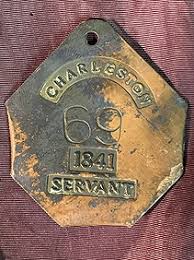
Dated 1841 Charleston, South Carolina Servant Slav…
liveauctioneers.com
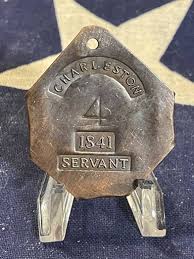
Dated 1841 Servant Charleston Slave Tag
liveauctioneers.com
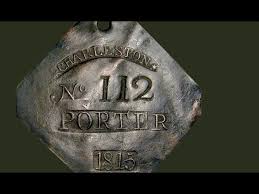
Slave Badges and Dog Tags: Personal Artifacts of E…
youtube.com
Collection
nmaahc.si.edu
African American culture memorabilia - Black Histo…
washingtonpost.com
Have an antique to identify?
Get an instant AI appraisal with values, history, and market insights.
Download for iPhone