What is my Blue Willow china worth, and how old is it?

By Ellen Whitlock ·
Most Blue Willow is modest: single modern and Japanese-made pieces are typically $5 to $30, while 19th-century English and Scottish platters and tureens are reported at about $400 to $573. The base decides where yours falls: ENGLAND means 1891 or later, and condition matters.
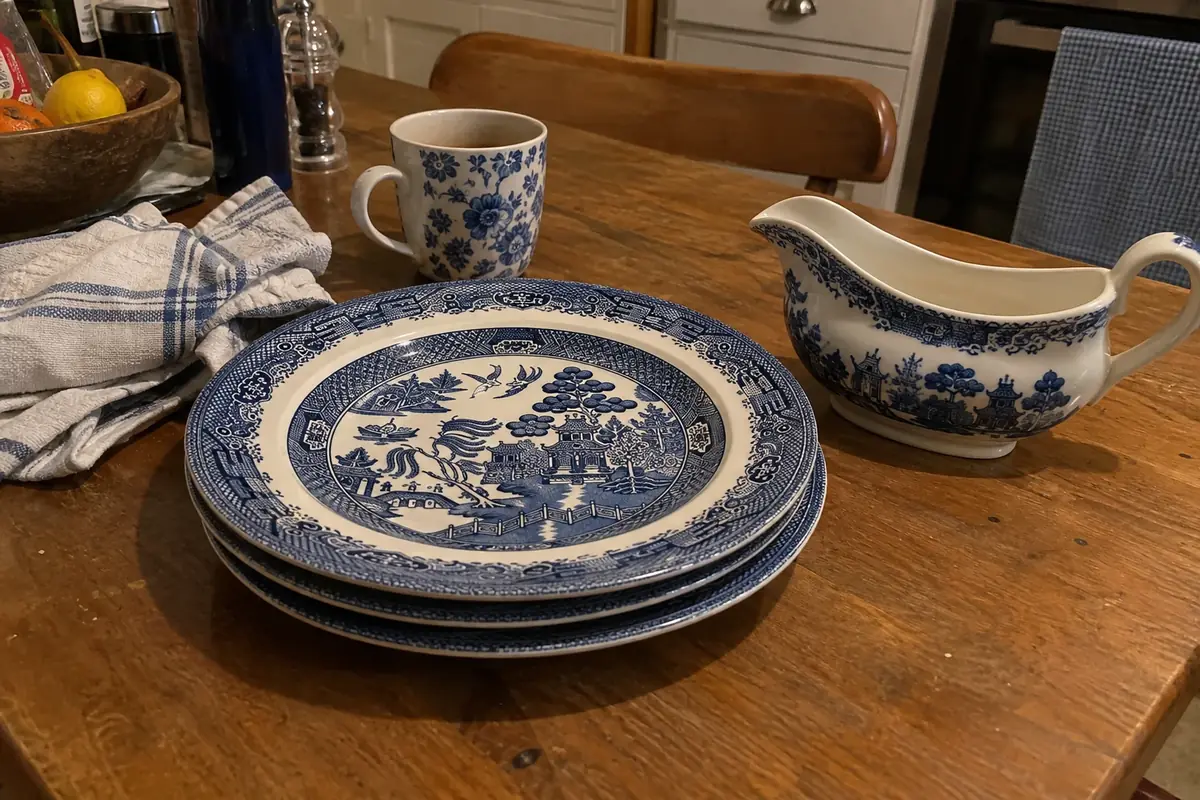
What is Blue Willow china worth?
Where yours lands depends on who made it, where, and what kind of piece it is, more than on the pattern itself.
| Type of piece | Typical value |
|---|---|
| English 19th-century plates and small piecesIncludes Mason's ironstone plates and an English Staffordshire cow creamer; age and maker decide the price. | $90–$250 |
| 19th-century English and Scottish platters and tureensMeat platters, soup tureens and serving platters; teapots are left out. | $400–$573 |
| English serving pieces, about 1900 to 1960Johnson Brothers, Booths and Royal Doulton tureens and serving lots; intact gilding helps. | $250–$375 |
| English single plates and small pieces, about 1890 to 1960Creamers, plates and platters from makers such as Ridgway, Allerton's and Alfred Meakin. | $18–$100 |
| Buffalo Pottery (American)A serving bowl and a wash bowl and pitcher set; single plates sell for less. | $100–$175 |
| Japanese export plates, cups and saucers, 1920s to 1950sPlates sit at the bottom of the range and cup and saucer sets at the top. | $7–$20 |
| Post-1950 and unmarked single piecesModern, Royal China, Buffalo China and unmarked single pieces. | $5–$30 |
| Complete dinner sets in used conditionSets with minor wear; larger sets, such as a 72-piece Churchill, bring the most. | $275–$600 |
Few prices are published for Buffalo Pottery, so treat that row as a rough guide.
Large serving pieces are where the money is: Antiques Know How reports 19th-century English and Scottish platters and tureens in the hundreds. At the top, LoveToKnow reports a Tiffany & Co. Copeland Spode blue willow teapot from about 1880 at $700.
How to date Blue Willow from the backstamp
Blue Willow is a pattern, not one maker. The earliest printed English willow was made around 1790 for Josiah Spode, and Buffalo Pottery of Buffalo, New York made the first American Old Willow in 1905. Turn yours over and match the base to the table.
| Backstamp | Years |
|---|---|
| No mark · early EnglishEarly pieces were often unmarked, but most blank-based willow is modern | 1790–1842 |
| Diamond · registered designA diamond-shaped 'lozenge' showing a registered design | 1843–1883 |
| Rd No. · registration number'Rd No.' and a number, which replaced the diamond | 1884 on |
| ENGLANDAdded by most British makers to meet a US tariff law | 1891–1914 |
| MADE IN ENGLANDThe fuller wording, though some makers used it earlier | 1914 on |
| Buffalo Pottery · buffalo markA standing buffalo and the words BUFFALO POTTERY, sometimes with a printed year | 1905 on |
| Japan · Made in Japan'Japan' replaced 'Nippon' on wares sent to the US | 1921 on |
| Occupied JapanRequired on export goods, and some makers kept using it after the rule ended | 1947–1952 |
According to thepotteries.org, the diamond and Rd No. date the design, not your piece, because pieces could be made years after registration.
Then check your Blue Willow in five steps
- Find a maker's name or crest. Spode, Booths, Allerton's and Buffalo Pottery are names that turn up in price guides.
- Read the country words. Each wording in the table covers a span of years. A Made in Occupied Japan stamp narrows it to a few years.
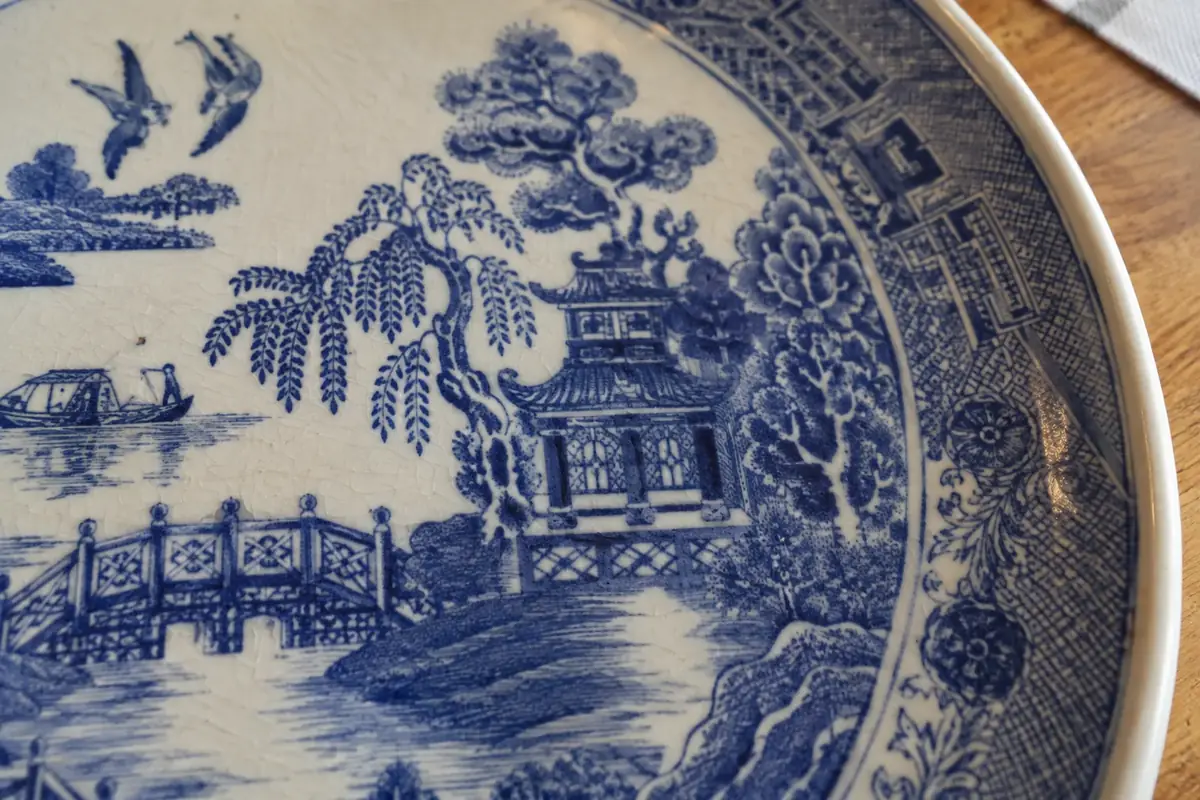
- Study the blue scene under a magnifier. From 1803 finer tissue paper allowed engraved line and stipple (small dot) work, and decals replaced transfer printing for commercial work in the early 1900s. A flat, mechanically even print with none of that engraved character points to a later piece.
- Check the glaze. Early willow tends to have a lighter, softer glaze that shows crazing.
- Run a finger round the rim, handles and any gold trim. You are feeling for chips, hairlines and rubbed gilding, which all pull the price down.
If the stamp on your base isn't in the table, browse pottery marks for similar ones.
What makes one Blue Willow piece worth more than another?
- Maker
- Well-established makers typically command higher values than anonymous ones.
- Country and age
- According to Texas Antique Mall, English pieces from the 1800s are worth the most, followed by American pieces, with Japanese and unmarked versions valued considerably lower. Early dated Buffalo Pottery pieces in good condition consistently outsell later English imports.
- Type of piece
- Serving pieces tend to bring the highest prices, and large pieces such as platters, tureens and coffee pots bring the most. Round serving trays of 17 to 19 inches are reported at $370 to $395, maker unnamed.
- Condition
- Mint pieces fetch a premium, while chipped or worn ones sell at substantially reduced prices. On gilded ware, worn gold lowers the price.
- Completeness
- A soup tureen should come with its lid, liner, ladle and underplate, and a missing ladle significantly reduces its value.
Is my Blue Willow old or a modern reproduction?
Most modern willow is honest current production, not a fake. A mass-produced 1980s plate might be worth only a few dollars, while a pristine early 19th-century Spode teacup can fetch hundreds. Signs that a piece offered as old is newer:
- A missing willow tree, pagoda, bridge or pair of birds
- A smooth, glossy glaze with no crazing
- A 'made in China' mark, which some modern willow carries
Some limited-edition 21st-century hand-painted Churchill sets can interest collectors, but ordinary modern pieces rarely do.
Where to sell Blue Willow
Match the venue to the piece. Photograph an English platter or tureen carefully, base and rim included, and offer it through an auction house or an online auction where buyers search by maker, because serving pieces tend to bring the highest prices. Everyday plates, cups and Japanese-made pieces move best as matched sets or lots, because a single plate rarely justifies the packing and postage.
Common Blue Willow questions
Is Blue Willow china worth anything?
Yes, and most of the money is in large serving pieces rather than everyday plates and cups.
Who made Blue Willow china?
Many factories did, English first and American later. The first printed English willow came from a copperplate thought to have been engraved by Thomas Minton for Josiah Spode, and Buffalo Pottery later made the first American Old Willow.
Is Blue Willow marked Japan valuable?
Usually modest, since Japanese export ware is common, though it is genuinely vintage and became popular in the 1920s.
Is unmarked Blue Willow valuable?
Usually not, but early pieces were often unmarked too, so a blank base settles little. Check the glaze and printing as well.