Cloisonne Thimble Value Guide
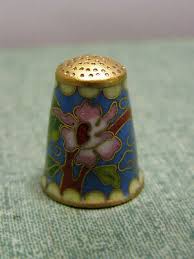
- Period
- 1900-1940
- Origin
- China
- Materials
- Brass, enamel
- Category
- Cloisonne enamel
Dating from 1900 to 1940, these Chinese cloisonne thimbles represent a miniature fusion of utilitarian sewing tools and ancient decorative artistry. They are highly collectible due to their vibrant floral patterns and the intricate process of soldering brass wires to create distinct enamel cells.
What Is Cloisonne Thimble Worth?
The typical price range for Cloisonne Thimble is $40 - $60 based on recent sales. However, values can vary depending on the item's condition, rarity, and other factors such as:
- Condition of the enamel, as chips or cracks significantly reduce the value from the $40-$60 range.
- Complexity of the floral design, with more intricate multi-colored patterns commanding higher prices.
- Presence of original patina on the brass interior and rim, which collectors prefer over polished surfaces.
- The precision of the wire work, where thinner and more symmetrical wires indicate superior craftsmanship.
How to Identify Cloisonne Thimble?
- Examine the base material for aged brass, which was the standard metal used for these early 20th-century Chinese exports.
- Look for hand-applied wire work forming the 'cloisons' or cells that hold the colored enamel patterns.
- Identify traditional Chinese floral motifs, which are characteristic of the 1900-1940 production era.
- Check for a pitted or slightly uneven surface in the enamel, indicating authentic hand-fired craftsmanship rather than modern machine-made replicas.
History of Cloisonne Thimble
Cloisonne is an ancient technique for decorating metalwork objects with colored material held in place by metal strips or wire, usually made of gold or silver, or in later times copper, which have been soldered to the metal surface. The technique originated in the Near East and was perfected in China, particularly during the Ming and Qing dynasties. Cloisonne thimbles became popular collectible items, often given as gifts or souvenirs, showcasing intricate craftsmanship in a small, utilitarian object.
Shop Similar
Vintage Lot of 12 Thimbles Glass Case Sewing Wedgw…
ebay.com · $40
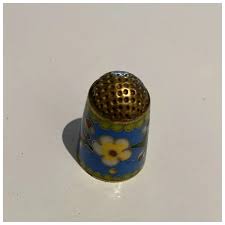
Antique sewing Eyelet Bodkin Implement & Cloisonne…
rubylane.com · $95

Vintage Enamel Brass Timble For Collectors | eBay
ebay.com.sg

Vintage 3 pc Set Cloisonne Thimbles Brass and Enam…
ebay.com
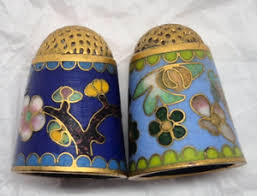
Cloisonne Thimbles | eBay
ebay.com
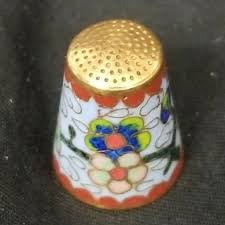
Vintage Chinese Cloisonné Flowers Blue Enamel Thim…
ebay.com.au
Related Items
Have an antique to identify?
Get an instant AI appraisal with values, history, and market insights.
Download for iPhone