Corinthian Alabastron Value Guide
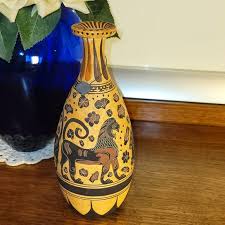
- Period
- 620-590 BC
- Origin
- Greece
- Materials
- Terracotta, pigment
- Category
- Corinthian artifact
The Corinthian Alabastron is a quintessential artifact of the Archaic period, serving as a sophisticated vessel for oils and perfumes in ancient Greece. These terracotta pieces are highly collectible due to their distinct elongated forms and the intricate black-figure painting style synonymous with the city-state of Corinth.
What Is Corinthian Alabastron Worth?
The typical price range for Corinthian Alabastron is $500 - $600 based on recent sales. However, values can vary depending on the item's condition, rarity, and other factors such as:
- The preservation of the painted motifs, as clear and vibrant black-figure illustrations significantly increase market value.
- Overall structural integrity, including the presence of the original rim and the absence of major cracks or modern repairs.
- The complexity of the decoration, with rare mythological scenes commanding higher prices than standard geometric bands.
- Provenance and documentation verifying the item's history and legal excavation or collection status.
How to Identify Corinthian Alabastron?
- Look for the characteristic elongated body with a rounded base and a narrow, flaring neck designed for controlled pouring.
- Examine the surface for authentic black-figure techniques depicting mythological creatures, animals, or repetitive geometric patterns.
- Verify the material is genuine terracotta with pigments consistent with 7th-century BC Greek craftsmanship.
- Check for the presence of a small handle or a pierced lug used for threading a carrying cord, typical of the 620-590 BC era.
History of Corinthian Alabastron
Originating from Corinth, a prominent city-state in ancient Greece, alabastrons were popular containers for oils and perfumes. They were particularly common during the Archaic period, known for their elaborate black-figure painting style, often depicting mythological scenes, animals, and intricate geometric patterns. These vessels were not just utilitarian objects but also significant artistic expressions.
Shop Similar
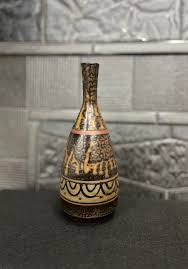
AKI VASE – Sayumi Iro Iro
sayumi-iroiro.com · $60
Art | Handpainted Korinthian Greecian Vase | Poshm…
poshmark.com · $93
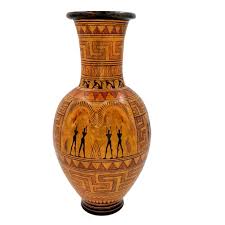
Geometric funeral Greek Amphora 26cm,Dipylon Cemet…
ifigeneiaceramics.com · €97
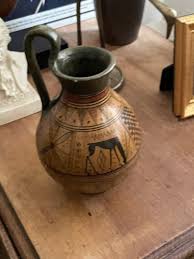
Hand Painted 6" Greek Pottery Souvenir Vase, Inclu…
ebay.com

Geometric Period Ceramic Alabastron, Hand Painted …
etsy.com

Geometric Period Ceramic Alabastron, Hand Painted …
etsy.com
Have an antique to identify?
Get an instant AI appraisal with values, history, and market insights.
Download for iPhone