Corning Visions Saucepan Value Guide
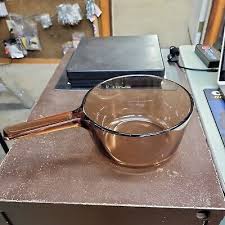
- Period
- 1980-1989
- Origin
- France
- Materials
- Glass-ceramic
- Category
- Visions cookware
The Corning Visions saucepan is a hallmark of 1980s kitchen innovation, celebrated as the first see-through cookware line. Crafted from Calexium glass-ceramic in France, these amber-colored vessels are highly collectible for their ability to withstand extreme thermal shock on stovetops and in microwaves.
What Is Corning Visions Saucepan Worth?
The typical price range for Corning Visions Saucepan is $18 - $20 based on recent sales. However, values can vary depending on the item's condition, rarity, and other factors such as:
- Condition of the glass-ceramic, specifically looking for the absence of 'flea bites' or deep scratches on the cooking surface.
- Clarity of the amber color, as cloudy or etched glass from heavy dishwasher use can decrease the $18-$20 market value.
- Presence of original manufacturing stamps indicating the French origin, which is preferred by many vintage Corning collectors.
- Size and capacity of the saucepan, with standard 1-pint to 1.5-quart sizes being the most common in this price bracket.
How to Identify Corning Visions Saucepan?
- Check for the distinctive transparent amber or 'cranberry' tint characteristic of the 1980s production era.
- Look for the 'Visions' brand name and 'France' origin mark typically embossed on the handle or base.
- Verify the material is Calexium glass-ceramic, which has a smooth, non-porous surface unlike standard tempered glass.
- Confirm the absence of a lid, as this specific model is frequently traded as a standalone open saucepan.
History of Corning Visions Saucepan
Visions cookware was introduced in Europe by Corning France in the late 1970s and launched in the United States in the early 1980s. It is made of a unique transparent glass-ceramic material called Calexium, designed to withstand extreme temperature changes and intended for use on stove tops, in ovens, and in microwaves. Its popularity peaked in the mid-1980s as the first see-through cookware line.
Shop Similar
Corning Visioncookware 1.5L Pot Sauce Pan NO Lid M…
ebay.com · $18
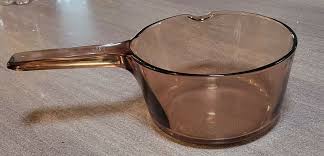
Pyrex Visions Amber Glass Cookwear 1 Qt Saucepan N…
ebay.com · $20
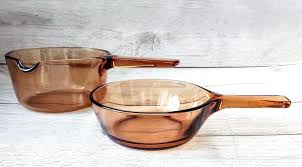
Vintage Amber Corningware Visionware Saucepans .5L…
ebay.com · $20
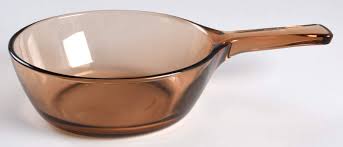
Visions Amber 1 Pint Open Saucepan by Corning Core…
replacements.com · $40
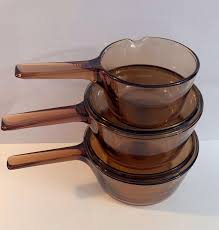
Vintage Visions Corning Amber Cookware,glass Cookw…
etsy.com · $231
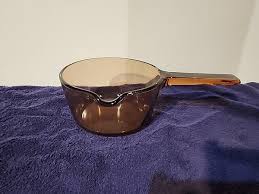
Vision Glass Sauce Pan Amber, 1L | eBay
ebay.com
Related Items
Have an antique to identify?
Get an instant AI appraisal with values, history, and market insights.
Download for iPhone