Dancing Minstrel Toy Value Guide
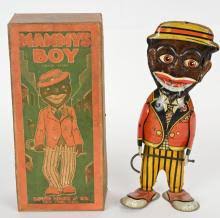
- Period
- 1900-1930
- Origin
- United States
- Materials
- Painted wood, metal, springs, fabric
- Category
- Tin toy
The Dancing Minstrel Toy is a notable example of early 20th-century American folk art, featuring a spring-loaded platform that allows the figure to perform a rhythmic jig. While these toys are significant artifacts of the minstrel show era, they are highly sought after by collectors of mechanical toys and historical social memorabilia.
What Is Dancing Minstrel Toy Worth?
The typical price range for Dancing Minstrel Toy is $200 - $250 based on recent sales. However, values can vary depending on the item's condition, rarity, and other factors such as:
- Condition of the original paint and the integrity of the wooden limbs significantly impact the $200-$250 price range.
- The presence and functionality of the original spring mechanism or wooden dancing board.
- Rarity of the specific caricature and the preservation of any original fabric clothing.
- Historical provenance and the item's status as a well-preserved example of early mechanical folk art.
How to Identify Dancing Minstrel Toy?
- Look for a combination of painted wood and metal components consistent with early 1900s American manufacturing.
- Verify the presence of the original spring-loaded platform or vibration board used to activate the dancing motion.
- Check for authentic period-correct fabric remnants and hand-painted facial features typical of the 1900-1930 era.
- Examine the mechanical joints at the hips and knees which allow for the characteristic 'jig' movement.
History of Dancing Minstrel Toy
These types of dancing minstrel toys, often referred to as 'dancing Sambo' or 'jig dolls,' were popular in the late 19th and early 20th centuries. They were designed to perform a 'jig' or dance when activated, typically by bouncing or vibrating the board they stood upon. While once common, these items are now recognized as artifacts of a racially insensitive era, reflecting the minstrel show caricatures prevalent at the time. Today, they are primarily collected for their historical context and as examples of folk art or early mechanical toys, though their imagery is widely understood to be offensive.
Shop Similar
Sold at Auction: MARX MAMMY'S BOY TIN WINDUP w/ BO…
invaluable.com · $325
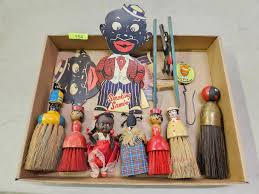
Sold at Auction: LOT OF VINTAGE BLACK AMERICANA AN…
invaluable.com
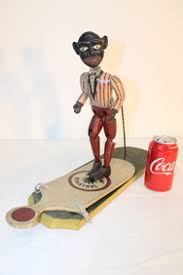
Vintage "dancin Minstrel" Jointed Wood Black Toy
liveauctioneers.com
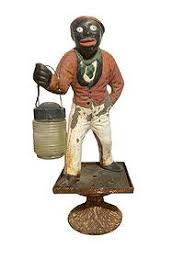
Cast Iron Black Slave Lawn Jockey With Lantern
liveauctioneers.com
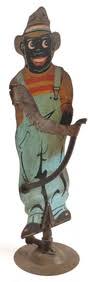
Sprinklin' Sambo Lawn Sprinkler
liveauctioneers.com
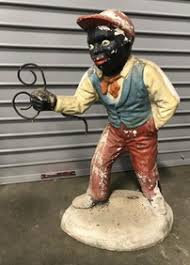
Vintage Black Americana Lawn Jockey
liveauctioneers.com
Related Items
Have an antique to identify?
Get an instant AI appraisal with values, history, and market insights.
Download for iPhone