Dansk Teak Serving Tray Value Guide
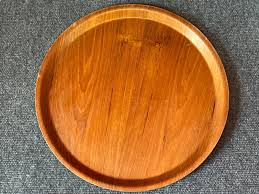
- Period
- 1960-1969
- Origin
- Denmark
- Materials
- Teak
- Category
- Dansk tableware
This 1960s Dansk circular serving tray is a quintessential example of the Danish Modern movement, showcasing the innovative 'staved teak' technique popularized by Jens Quistgaard. Its combination of sustainable craftsmanship and water-resistant functionality made it a high-end staple of mid-century interior design.
What Is Dansk Teak Serving Tray Worth?
The typical price range for Dansk Teak Serving Tray is $125 - $135 based on recent sales. However, values can vary depending on the item's condition, rarity, and other factors such as:
- Condition of the wood surface, specifically the absence of deep knife marks, water rings, or drying cracks.
- Presence and clarity of the original manufacturer's fire stamp or engraved logo on the base.
- The quality of the oil finish; well-maintained trays with a vibrant honey-gold luster command higher prices.
- Market demand for specific sizes, with larger circular staved patterns typically reaching the $125-$135 valuation range.
How to Identify Dansk Teak Serving Tray?
- Look for the 'Dansk International Designs' brand mark or the 'JHQ' initials for designer Jens Quistgaard on the underside.
- Examine the wood for the 'staved' construction, which features distinct vertical segments of teak joined together seamlessly.
- Verify the origin stamp, which should typically indicate 'Denmark' or 'Thailand' depending on the specific production year within the era.
- Check for the characteristic smooth, beveled edges and the rich, warm grain pattern inherent to solid teak from the 1960s.
History of Dansk Teak Serving Tray
Designed during the 1960s, this style of tray is emblematic of the Danish Modern movement. Jens Quistgaard, the chief designer for Dansk International Designs, popularized the use of staved teak—a technique of joining smaller pieces of wood together—which allowed for beautiful, sustainable, and water-resistant kitchenware that became a staple of high-end mid-century homes.
Shop Similar
Formed Teak Wood Serving Tray 14” Round Japan Mais…
ebay.com · $24
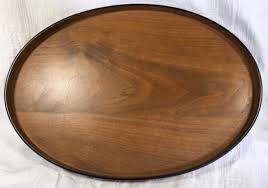
Oval Wood TRAY 15.25” x 10.75” GIFT IDEAS CREATION…
ebay.com · $50
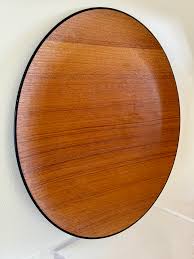
Mid Century Japanese Circular Teak Tray | Chairish
chairish.com · $125
Large Teak Tray By Fritz Hansen c. 1960
urbanamericana.com · $295
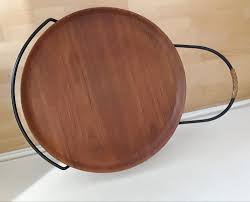
Vintage Swedish Bar Wagon with Black Iron Frame, 1…
chairish.com · $487
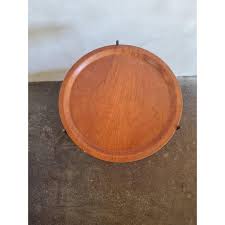
Mid-Century Modern Serving Trolley | Chairish
chairish.com · $526
Have an antique to identify?
Get an instant AI appraisal with values, history, and market insights.
Download for iPhone