Decorative Ceramic Urn Value Guide
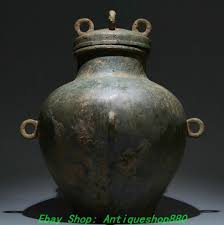
- Period
- late 19th century - mid 20th century
- Origin
- Unknown, likely Europe or East Asia
- Materials
- ceramic, glaze, gilt
- Category
- Ceramic urn
This late 19th to mid-20th century decorative ceramic urn is a prime example of revival style, blending rustic glazes with elegant gilt floral motifs to mimic antique metalwork. Highly collectible for its twin loop handles and vibrant green finish, these pieces were primarily designed as sophisticated mantel or shelf ornaments for the global home-decor market.
What Is Decorative Ceramic Urn Worth?
The typical price range for Decorative Ceramic Urn is $75 - $150 based on recent sales. However, values can vary depending on the item's condition, rarity, and other factors such as:
- Condition of the gilt floral motif, as gold leaf or paint often wears away with improper cleaning.
- Integrity of the twin loop handles, which are prone to hairline fractures or professional repairs.
- The vibrancy and uniformity of the green glaze across the body of the urn.
- Presence of any maker's marks or origin stamps on the underside that could pinpoint its European or East Asian manufacture.
How to Identify Decorative Ceramic Urn?
- Examine the twin loop handles for symmetrical placement and hand-finished ceramic joins.
- Look for the specific combination of a deep green glaze paired with applied gilt floral patterns.
- Check the base for wear patterns consistent with late 19th to mid-20th century shelf placement.
- Identify the imitation metalwork style which was a hallmark of European and East Asian decorative exports during this era.
History of Decorative Ceramic Urn
Handled ceramic urns have been made for centuries as both functional vessels and decorative objects. This example follows 19th- to 20th-century decorative revival styles that combined rustic glazes with applied gilding to imitate older metalwork. Such pieces were commonly produced in Europe and Asia for the collector and home-decor market and often used as mantel or shelf ornaments rather than for practical storage.
Shop Similar
Lot - Selden Bybee art pottery vase - Lexington, K…
auctions.caswellprewittrealty.com · $210
Hydria - Large Water Vessel - Award for Sports and…
etsy.com · $926
16''Old Chinese Dynasty Bronze Ware Inscription Co…
ebay.com · $1130
Roman Glass Cosmetic Jar (100-300 AD) with Intrica…
ancientlevant.com · $1200
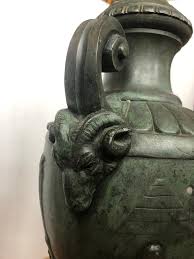
20th Century French Green Patinated Urn as Lamp wi…
1stdibs.com · $1850
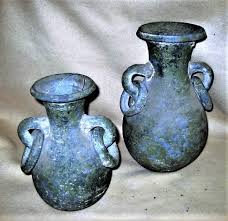
Buy 2 Rustic/primitive Style Vessels Online in Ind…
etsy.com · ₹31522
Have an antique to identify?
Get an instant AI appraisal with values, history, and market insights.
Download for iPhone