Edo Kiriko Whiskey Glass Value Guide
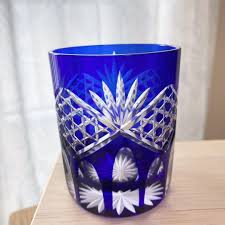
- Period
- 1960-1980
- Origin
- Japan
- Materials
- Cut crystal glass
- Category
- Edo kiriko glass
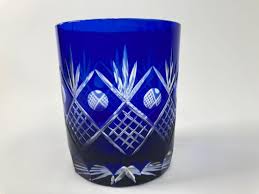
This mid-century Edo Kiriko whiskey glass represents a pinnacle of Japanese craftsmanship, featuring a striking cobalt blue layer over clear crystal. These pieces are highly collectible for their precision-cut starburst and crosshatch motifs that demonstrate the evolution of 19th-century glass-cutting techniques into modern barware.
What Is Edo Kiriko Whiskey Glass Worth?
The typical price range for Edo Kiriko Whiskey Glass is $100 - $120 based on recent sales. However, values can vary depending on the item's condition, rarity, and other factors such as:
- The depth and vibrancy of the cobalt blue pigment significantly impact the market price.
- Condition is critical, as any flea bites, chips, or clouding in the crystal will lower the $100-$120 valuation.
- The complexity of the pattern, specifically the density of the starburst and crosshatch cuts, dictates desirability.
- Provenance or original maker markings from the 1960-1980 period can increase the glass's value to the high end of the range.
How to Identify Edo Kiriko Whiskey Glass?
- Look for the distinct 'cut-to-clear' technique where the cobalt blue outer layer is carved away to reveal transparent crystal beneath.
- Examine the starburst and crosshatch patterns for hand-cut precision; authentic pieces show sharp, crisp edges rather than rounded, molded lines.
- Verify the weight of the glass, as genuine Edo Kiriko from the 1960-1980 era is made of heavy, high-quality lead crystal.
- Check for the characteristic light refraction caused by the intricate polishing of the deep geometric grooves.
History of Edo Kiriko Whiskey Glass
Edo Kiriko refers to a traditional Japanese craft of cut glass, originating in the Edo period in the early 19th century. This distinct style involves intricate cutting and polishing techniques, often applied to colored glass, creating dazzling patterns that play with light. It was initially inspired by Western glass-cutting methods introduced to Japan but evolved into a uniquely Japanese art form, prized for its precision and beauty.
Shop Similar
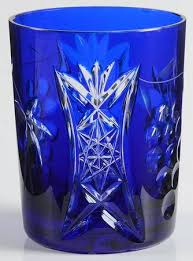
Beyer, BEZ1 Various Colors | Replacements, Ltd.
replacements.com · $70
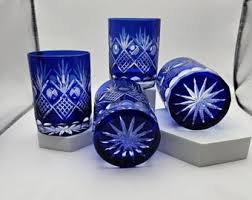
1970's Vintage Whiskey / Bourbon Baccarat-style Co…
etsy.com · $125
Taiburo workshop Edo Kiriko glassset | eBay
ebay.com · $143
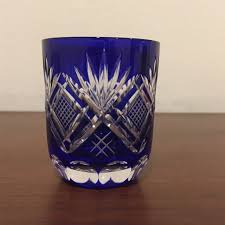
EDO KIRIKO CUT GLASS "NANAKO PATTERN (SET)"-GUINOM…
hitachiyausa.com · $149
Whiskey Crystal Glasses Tumbler Baccarat Style Blu…
1stdibs.com · $395
Whiskey Crystal Glasses Tumbler Baccarat Style Blu…
chairish.com · $395
Have an antique to identify?
Get an instant AI appraisal with values, history, and market insights.
Download for iPhone