Edo Period Wakizashi Value Guide
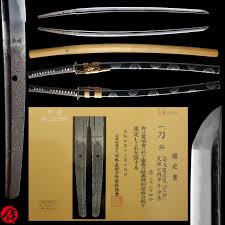
- Period
- 1603-1868
- Origin
- Japan
- Materials
- Tamahagane steel, ray skin, silk cord, wood, iron, lacquer
- Category
- Edo period sword
The Edo Period Wakizashi served as the essential 'companion sword' for the samurai class, permitted for indoor wear when the longer katana was restricted. This authentic Japanese short sword is highly collectible due to its hand-forged Tamahagane steel construction and its historical role as a symbol of the wearer's social status.
What Is Edo Period Wakizashi Worth?
The typical price range for Edo Period Wakizashi is $1,200 - $1,350 based on recent sales. However, values can vary depending on the item's condition, rarity, and other factors such as:
- The condition and clarity of the hamon line and the overall polish of the Tamahagane steel.
- The completeness and preservation of the koshirae (mountings), including the lacquered wood scabbard and iron tsuba.
- The presence of a signature (mei) on the tang which can attribute the blade to a specific smith or school.
- The integrity of the ray skin and silk wrap on the handle, as original organic materials are prone to decay.
How to Identify Edo Period Wakizashi?
- Look for a visible hamon (temper line) along the blade edge, indicating traditional clay tempering methods.
- Examine the tang (nakago) for potential signatures or file marks characteristic of Edo-era smithing.
- Verify the presence of authentic materials including ray skin (samegawa) and silk cord (ito) on the hilt.
- Check for a curved blade profile consistent with authentic Japanese smithing rather than modern mass-produced replicas.
History of Edo Period Wakizashi
Short swords like this wakizashi were worn alongside the longer katana by the samurai class during the Edo period. Known as the companion sword, it was kept close at all times, even indoors where the katana was prohibited. This specific example features a curved blade with a visible hamon line, indicating it was hand-forged using traditional clay tempering methods.
Shop Similar
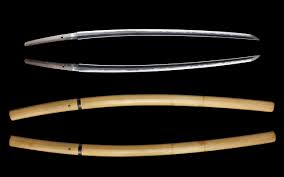
Edo period Nihonto Fujiwara Tamenao | Samurai Muse…
samuraimuseum.jp · ¥500000
Antique Japanese Sword Katana Signed by Naotane| S…
samuraimuseum.jp · ¥3800000
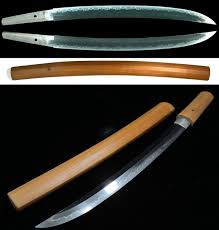
Antique Japanese Sword MUMEI 無銘 Edo NIHONTO Samura…
ebay.com
40" Razor Sharp Samurai Katana Sword Full Tang Han…
ebay.com
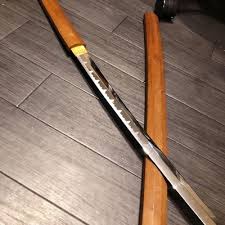
Japanese Imitation Sword Katana Wakizashi Authenti…
ebay.com
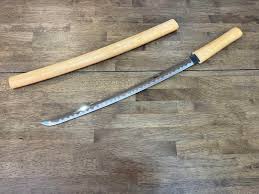
Japanese Sword, Imitation Sword, Japanese Katana, …
etsy.com
Have an antique to identify?
Get an instant AI appraisal with values, history, and market insights.
Download for iPhone