Firemanship Merit Badge Value Guide
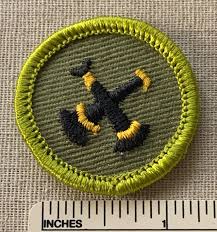
- Period
- 1961-1968
- Origin
- United States
- Materials
- Cotton, embroidery thread
- Category
- Merit badge
The Firemanship merit badge is a cornerstone of Boy Scouts of America history, being one of the original 57 badges introduced in 1911. This specific 1960s iteration represents the 'Type F' era, showcasing the transition to modernized production techniques while maintaining its iconic firefighting imagery.
What Is Firemanship Merit Badge Worth?
The typical price range for Firemanship Merit Badge is $10 - $11 based on recent sales. However, values can vary depending on the item's condition, rarity, and other factors such as:
- Condition of the green border, as fraying or 'thread breaks' significantly reduce the $10-$11 market value.
- Presence of original backing material, which confirms the badge was never sewn onto a sash or uniform.
- Color vibrancy of the khaki base and black embroidery, ensuring no sun-fading or water staining is present.
- The specific 'Type F' designation, which is a key identifier for collectors focusing on the 1960s era of scouting.
How to Identify Firemanship Merit Badge?
- Look for the 'Type F' rolled-edge border in green, which distinguishes it from earlier crimped-edge versions.
- Verify the design features a black embroidered fire nozzle and fire axe centered on a khaki cotton background.
- Check the reverse side for the characteristic clear or white plastic-like 'glue' backing common in 1960s manufacturing.
- Confirm the dimensions and embroidery density match standard BSA issue from the 1961-1968 period.
History of Firemanship Merit Badge
The Firemanship merit badge was one of the original 57 merit badges introduced by the Boy Scouts of America in 1911. The badge was designed to teach scouts fire safety, prevention, and basic firefighting techniques. This specific 'Type F' rolled-edge design was standard during the 1960s, representing a shift from the earlier crimped-edge versions as production methods modernized.
Shop Similar
Ceiling Fan Patrol Patch
tradingpost.classb.com · $3
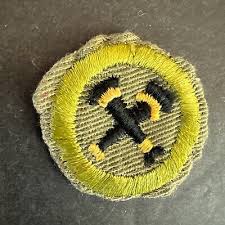
Vintage 1952-1960 BSA Boy Scouts of America ...
ebay.com · $5
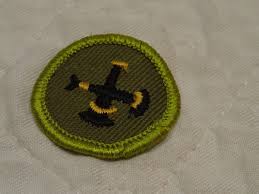
Vintage BSA Firemanship Merit Badge Badge Boy Scou…
ebay.com · $6
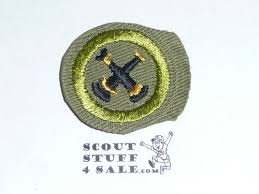
Firemanship - Type E - Khaki Crimped Merit Badge (…
scoutstuff4sale.com · $7
Vintage 1960s FIREMANSHIP Boy Scouts of America Me…
ebay.com · $18
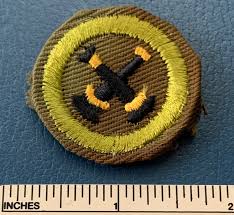
Vintage FIREMANSHIP Boy Scouts of America MERIT BA…
ebay.com · $25
Related Items
Have an antique to identify?
Get an instant AI appraisal with values, history, and market insights.
Download for iPhone