German Black Forest Weather House Value Guide
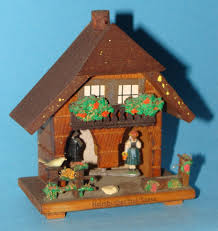
- Period
- 1950-1980
- Origin
- Germany
- Materials
- wood, paint, metal pin, natural fiber (hair or gut)
- Category
- Black forest cuckoo clock
The German Black Forest Weather House is a classic piece of folk art that functions as a mechanical hygrometer using natural fibers to predict the weather. These mid-century chalets, often produced by makers like Toggli and Trenkle, are highly collectible for their hand-painted details and traditional Alpine aesthetic.
What Is German Black Forest Weather House Worth?
The typical price range for German Black Forest Weather House is $20 - $50 based on recent sales. However, values can vary depending on the item's condition, rarity, and other factors such as:
- Operational status of the internal humidity-sensitive fiber and the movement of the figures.
- Manufacturer branding, with identified pieces from Trenkle or Toggli commanding higher interest.
- Physical condition of the wood and paint, specifically looking for chips or fading from sun exposure.
- Presence of original decorative elements like miniature thermometers or plastic greenery.
How to Identify German Black Forest Weather House?
- Look for the 'Made in Germany' or 'West Germany' stamp on the base or back of the wooden chalet.
- Verify the presence of a natural fiber mechanism, such as catgut or hair, connected to the metal pin.
- Check for the traditional two-figure setup: typically a woman in a dirndl for dry weather and a man with an umbrella for rain.
- Examine the craftsmanship for hand-painted floral motifs and characteristic Black Forest architectural details.
History of German Black Forest Weather House
Weather houses originated in Central Europe in the 19th century as simple hygrometers. Traditionally made in the Black Forest region of Germany, these little chalet-style houses use a strip of catgut or hair that responds to humidity to move two carved figures: one comes out when it is dry and the other when it is wet. They became popular tourist souvenirs throughout the 20th century and were commonly produced by makers such as Toggli and Trenkle.
Shop Similar
Vintage Toggili German Weather Barometer Souvenir …
ebay.com · $20
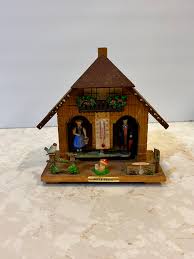
Vintage German Weather House Real Wood Made in Wes…
etsy.com · $62
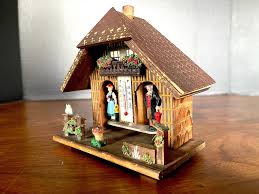
1930's-50's Toggili, Made in Germany, Miniature Ch…
etsy.com
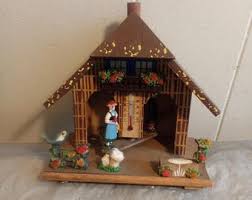
Weather Wizard Old Witch Dutch Boy and Girl Weathe…
etsy.com
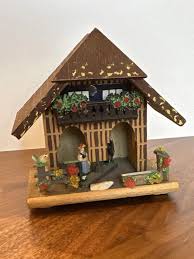
VTG GERMAN WOOD Weather House Station Chalet 5.5 x…
picclick.com
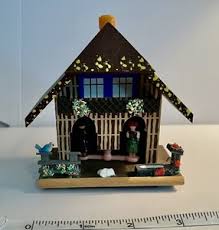
Toggili en vente | eBay
cafr.ebay.ca
Related Items
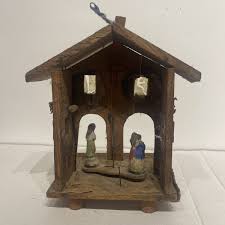
Have an antique to identify?
Get an instant AI appraisal with values, history, and market insights.
Download for iPhone