Hand Carved Bone Necklace Value Guide
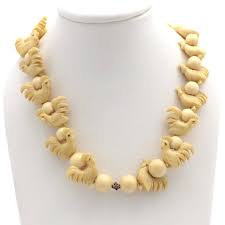
- Period
- 1950-1970
- Origin
- Unknown
- Materials
- Bone
- Category
- Bone necklace
This mid-century hand-carved bone necklace represents a continuation of a millennia-old tradition of utilizing natural materials for personal adornment. Featuring a central butterfly motif and shell-like pendants, it showcases the intricate craftsmanship popular in Southeast Asian and African trade jewelry between 1950 and 1970.
What Is Hand Carved Bone Necklace Worth?
The typical price range for Hand Carved Bone Necklace is $50 - $50 based on recent sales. However, values can vary depending on the item's condition, rarity, and other factors such as:
- The presence and condition of the central butterfly motif, as focal points significantly impact collector interest.
- The intricacy and depth of the hand-carved details across the individual beads and pendants.
- Overall structural integrity, specifically the strength of the stringing material and the functionality of the clasp.
- Market demand for mid-century natural material jewelry, currently valued at approximately $50 for similar examples.
How to Identify Hand Carved Bone Necklace?
- Examine the central butterfly motif for fine, non-uniform tool marks indicative of manual carving rather than machine molding.
- Look for the natural grain and tiny pores (Haversian canals) visible under magnification that distinguish genuine bone from plastic or celluloid.
- Check the assembly of the ornate shell-like pendants to ensure they are consistent with 1950-1970 construction methods.
- Verify the creamy, off-white patina which develops naturally on aged bone surfaces over several decades.
History of Hand Carved Bone Necklace
Carved bone jewelry has been a part of human adornment for millennia, predating the use of metals. Historically, bones from various animals were carved into beads, pendants, and other decorative elements, often imbued with symbolic meanings. This particular style, with its intricate carvings and natural motifs, gained popularity in various cultures, including those in Southeast Asia and parts of Africa, often traded along ancient routes. The craftsmanship reflects a rich tradition of utilizing natural resources for artistic expression and personal embellishment.
Shop Similar
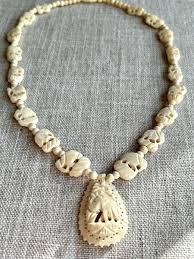
Vintage Carved Beaded Elephants Necklace, Excellen…
ebay.com · $20
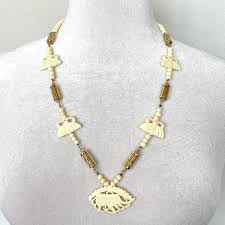
Elephant Bead Necklace: 26-inch Mixed Material Sta…
etsy.com · $24
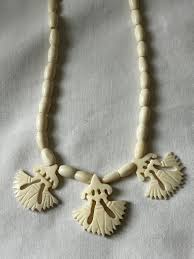
Egyptian Hand Carved Camel Bone Necklace Leaf Desi…
etsy.com · $27
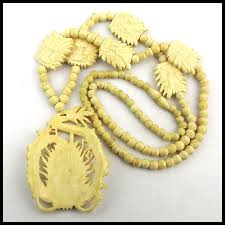
Vintage Carved Bone Dragon Heads Bead Necklace. Fo…
rubylane.com · $85
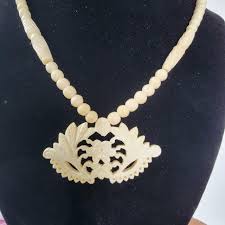
Long Carved Bone Necklace | Depop
depop.com · $85
Vintage Carved Resin Rooster Chicken Hen Bead Neck…
ebay.com · $95
Have an antique to identify?
Get an instant AI appraisal with values, history, and market insights.
Download for iPhone