Hand Carved Ebony Elephant Value Guide
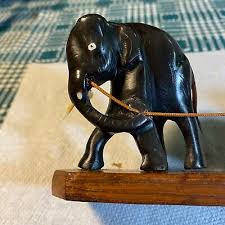
- Period
- 1930-1950
- Origin
- Sri Lanka
- Materials
- Ebony Wood, Bone
- Category
- Ebony carving
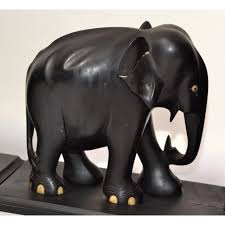
These mid-20th century figurines are highly collectible due to their construction from dense Diospyros heartwood, which provides a naturally lustrous, dark finish. Originally crafted as high-end souvenirs for colonial officers and travelers in Sri Lanka, they represent a sophisticated fusion of indigenous artistry and Art Deco-era decorative trends.
What Is Hand Carved Ebony Elephant Worth?
The typical price range for Hand Carved Ebony Elephant is $160 - $175 based on recent sales. However, values can vary depending on the item's condition, rarity, and other factors such as:
- The presence and condition of original inset bone tusks and eyes significantly impact the $160-$175 valuation.
- Intricacy of the carving, particularly the detail in the trunk, ears, and skin folds, dictates premium pricing.
- Surface condition, specifically the absence of 'checking' or cracks which can occur when ebony wood dries out over decades.
- Size and scale of the figurine, with larger solid-block carvings commanding the highest market prices.
How to Identify Hand Carved Ebony Elephant?
- Verify the weight; authentic solid ebony is exceptionally dense and will feel significantly heavier than stained softwoods.
- Examine the tusks and eyes for natural grain or 'Schreger lines' indicating genuine bone rather than modern plastic or resin.
- Look for the characteristic deep black or dark chocolate brown heartwood color that remains consistent even if the surface is lightly scratched.
- Check the base for hand-tool marks or specific Sri Lankan provenance labels consistent with 1930-1950 manufacturing.
History of Hand Carved Ebony Elephant
These figurines were primarily produced in Sri Lanka and parts of East Africa during the early to mid-20th century. Carved from the dense heartwood of Diospyros trees, ebony was highly prized for its naturally dark, lustrous finish and its ability to hold fine detail. These carvings became popular souvenirs for Western travelers and colonial officers, representing a fusion of indigenous craftsmanship and global decorative trends.
Shop Similar
Carved Water Buffalo Horn Elephants | eBay
ebay.com · $20
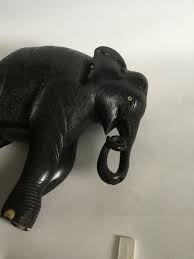
Vintage African Hand Carved Wooden Elephant C1940'…
etsy.com · $87
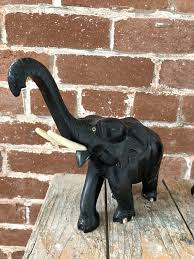
Vintage Set of Two Wooden Indian Elephants With Tu…
etsy.com · $101
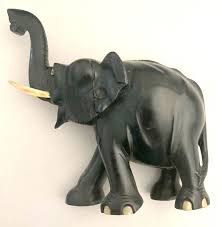
Vintage Carved Hardwood Elephant Group 7 Pcs. | eB…
ebay.com · $225
Early 20th Century Black Ebony Hand Carved Wood Bo…
chairish.com · $315
![LARGE[5.4kg]ANTIQUE EBONY HAND CARVED WOODEN ELEPHANT TABLE ...](https://site-cdn.tryrelic.app/antiques/hand-carved-ebony-elephant/5.jpg)
LARGE[5.4kg]ANTIQUE EBONY HAND CARVED WOODEN ELEPH…
ebay.com
Related Items
Have an antique to identify?
Get an instant AI appraisal with values, history, and market insights.
Download for iPhone