Hand Hammered Copper Plate Value Guide
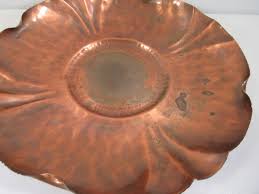
- Period
- 1900-1940
- Origin
- United States
- Materials
- Copper
- Category
- Copper plate
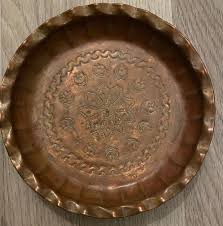
This hand-hammered copper plate is a quintessential example of the American Arts and Crafts movement, where artisans prioritized visible craftsmanship over industrial mass production. Its distinctive scalloped edge and central indentation reflect an era when functional serving pieces were elevated to works of decorative art.
What Is Hand Hammered Copper Plate Worth?
The typical price range for Hand Hammered Copper Plate is $70 - $100 based on recent sales. However, values can vary depending on the item's condition, rarity, and other factors such as:
- The presence of a known artisan or workshop hallmark can significantly increase the value within the $70-$100 range.
- Condition of the copper, specifically the absence of deep pitting, harsh chemical cleaning, or structural warping.
- The quality and preservation of the original patina, which collectors often prefer over a polished, bright finish.
- The complexity and uniformity of the hand-hammered texture and the symmetry of the scalloped decorative border.
How to Identify Hand Hammered Copper Plate?
- Look for irregular hammer marks across the surface, which indicate manual craftsmanship rather than machine stamping.
- Examine the scalloped edges for slight variations in shape, a hallmark of hand-finished metalwork from 1900-1940.
- Check the underside for maker's marks or signatures common to United States copper workshops of the early 20th century.
- Verify the material is solid copper by checking for a consistent reddish-orange hue beneath any natural aged patina.
History of Hand Hammered Copper Plate
Hand-hammered copperware has a rich history, particularly in the Arts and Crafts movement of the late 19th and early 20th centuries, where artisans valued handcrafted items over mass-produced goods. This plate's design reflects that aesthetic, emphasizing the beauty of visible craftsmanship. Such pieces were often used for serving or as decorative accents in homes, showcasing both utility and artistic skill.
Shop Similar
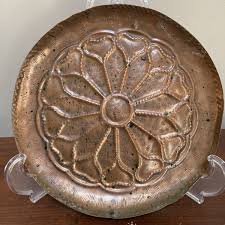
Antique 9.25” Hand Hammered Copper Wall Hanging Pl…
ebay.com · $35
Vintage Vermont CCV Arts and Crafts Hand Hammered …
ebay.com · $45
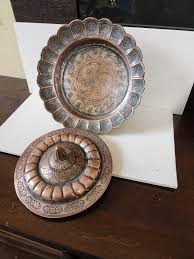
Antique Islamic Copper Hand Etched Bowl With Lid |…
chairish.com · $88
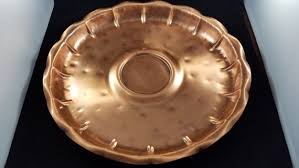
Gregorian Vintage Copper Chip and Dip Set With Can…
etsy.com · $90
Rare Ottoman Turkish Copper Plate/bowl – Antique H…
etsy.com · $205
Antique Hammered Copper Middle Eastern Bowls With …
ebay.com · $270
Related Items
Have an antique to identify?
Get an instant AI appraisal with values, history, and market insights.
Download for iPhone