Hmong Story Cloth Value Guide
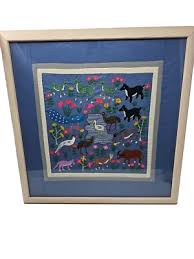
- Period
- 1970-1990
- Origin
- Laos
- Materials
- Cotton fabric, embroidery floss, wood frame, glass
- Category
- Hmong textile
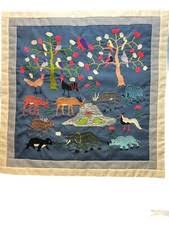
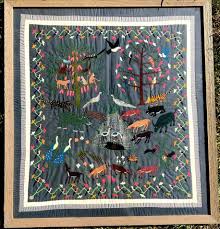
Hmong story cloths, or paj ntaub, are intricate hand-embroidered textiles that emerged from Southeast Asian refugee camps to preserve Hmong folklore and history. This specific 1970-1990 piece from Laos features a vibrant 'tree of life' surrounded by animals, symbolizing the harmony of the natural world.
What Is Hmong Story Cloth Worth?
The typical price range for Hmong Story Cloth is $150 - $200 based on recent sales. However, values can vary depending on the item's condition, rarity, and other factors such as:
- The complexity and density of the hand-stitched animal figures and the central tree motif.
- The physical condition of the cotton fabric and whether the embroidery floss has suffered from UV fading.
- The quality of the presentation, including the wood frame and glass protection which helps preserve the textile's integrity.
- The historical significance of the piece as a cultural record of the Hmong diaspora between 1970 and 1990.
How to Identify Hmong Story Cloth?
- Look for the characteristic 'paj ntaub' embroidery style featuring dense, meticulous hand-stitching on cotton fabric.
- Verify the 'tree of life' motif, which is a traditional Hmong design element often surrounded by various animal figures.
- Examine the reverse side of the textile for evidence of hand-embroidery knots and thread paths typical of 1970-1990 production.
- Check for the specific color palette of vibrant embroidery floss common to Laotian Hmong textiles from the late 20th century.
History of Hmong Story Cloth
Hmong story cloths, known as paj ntaub in Hmong, are a traditional form of textile art created by the Hmong people, an ethnic group from Southeast Asia. These cloths often depict stories from Hmong folklore, daily life, or significant historical events, particularly the experiences of the Hmong during and after the Vietnam War. They served as a way to preserve their culture and history, especially as many Hmong people became refugees. The intricate embroidery is typically done by women, passed down through generations, and each stitch tells a part of their rich heritage. This piece, with its "tree of life" motif and animal figures, likely symbolizes harmony and the natural world, a common theme in Hmong art.
Shop Similar
Embroidered Story Cloth Hand Stitched Professional…
ebay.com · $40
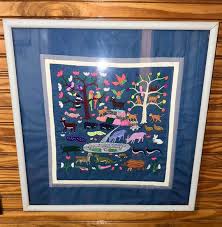
Vintage Framed Hmong Animal Story Cloth - Etsy
etsy.com · $68
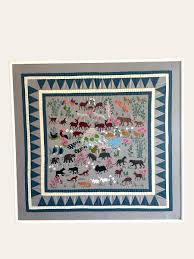
Vtg Lg Folk Art Tree of Life Animal Quilt Wall Art…
ebay.com · $135
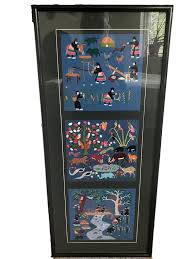
Traditional Hmong Embroidery Story Cloth Framed - …
etsy.com · $196
Handmade Animals 100% Cotton Home Décor Pillows fo…
ebay.com
Vtg Lg Folk Art Tree of Life Animal Quilt Hanging …
ebay.com
Have an antique to identify?
Get an instant AI appraisal with values, history, and market insights.
Download for iPhone