Horse-Drawn Delivery Wagon Value Guide
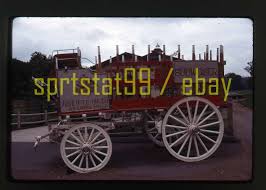
- Period
- 1910-1930
- Origin
- United States
- Materials
- Wood, Canvas, Metal
- Category
- Horse-drawn wagon
This 1910-1930 American delivery wagon represents the pinnacle of pre-motorized local commerce, used for transporting essential goods like milk and bread. Its professional restoration, featuring a striking red body and white spoked wheels, makes it a premier centerpiece for historical transport collectors.
What Is Horse-Drawn Delivery Wagon Worth?
The typical price range for Horse-Drawn Delivery Wagon is $15,000 - $18,000 based on recent sales. However, values can vary depending on the item's condition, rarity, and other factors such as:
- The quality and accuracy of the restoration, particularly the preservation of the original wood versus modern replacement parts.
- The structural integrity of the white spoked wheels and the condition of the canvas covering.
- Historical provenance or evidence of use by a specific early 20th-century American business or industry.
- Market demand for large-scale transport pieces, which currently places this specimen in the $15,000 to $18,000 price range.
How to Identify Horse-Drawn Delivery Wagon?
- Verify the presence of authentic 1910-1930 era construction techniques, specifically the joinery on the wooden spoked wheels.
- Check for the period-correct white canvas top material and the specific tensioning hardware used in early 20th-century US manufacturing.
- Examine the metal undercarriage and axle components for historical blacksmithing marks or manufacturer stamps consistent with early American wagon works.
- Confirm the red and white paint scheme matches the traditional commercial livery styles used by delivery businesses before the transition to motor vehicles.
History of Horse-Drawn Delivery Wagon
Horse-drawn delivery wagons were a common sight in towns and cities from the 19th century through the early 20th century, serving as the primary means for businesses to transport goods directly to customers. These wagons were used for everything from milk and bread delivery to mail and dry goods, playing a vital role in local commerce before the widespread adoption of motorized vehicles. The design often reflected the specific needs of the goods being transported, with covered wagons like this one offering protection from the elements.
Shop Similar
1970 Anheuser-Busch Budweiser Wagon @ St Louis Mus…
ebay.com · $19
Vintage RARE Louis Marx Covered Wagon and Horse Se…
etsy.com · $2681
Postcard Cheyenne-Black Hills Stage Wyoming State …
ebay.com
COUNTRY, CARRIAGE, TRACTORS, AND MORE @ NOON 2022-…
liveauctioneers.com
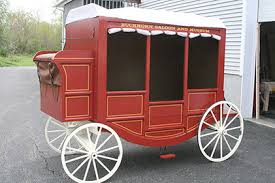
Props
imaginartstudios.com
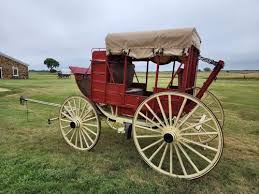
Fort Larned National Historic Site - hikes and tra…
alltrails.com
Related Items
Have an antique to identify?
Get an instant AI appraisal with values, history, and market insights.
Download for iPhone