What is the value of a Hummel figurine?

By Ellen Whitlock ·
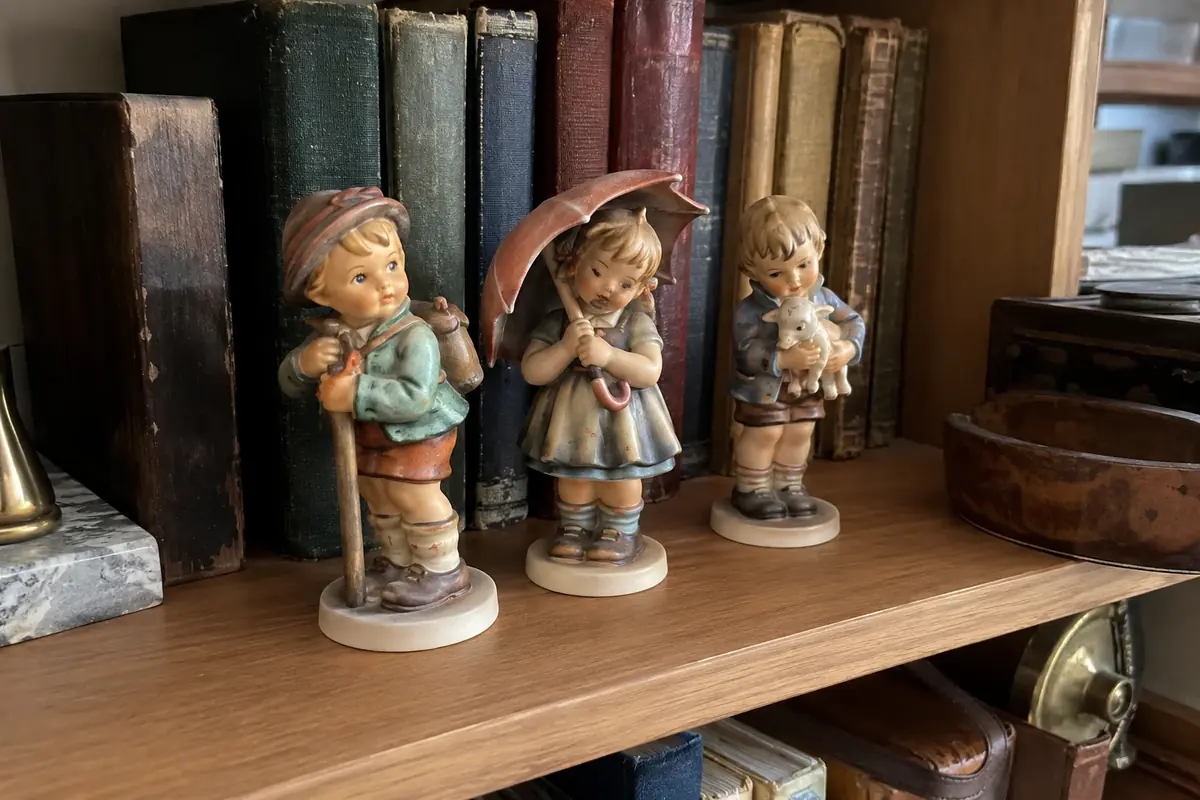
Most Hummel figurines are worth about $25 to $75. Pieces made before 1949, and figures taller than 12 inches, can reach four figures. The trademark on the base dates yours, and chips or repairs cut the value. Check the mark first, then the size and condition.
What is a Hummel worth?
Hummels sell for far less than most owners remember paying. Where yours lands depends on the trademark on the base, the size, the model and the condition.
| Type of piece | Typical value |
|---|---|
| Common figurines, TMK-6 (1979) and laterSize and condition move a piece within the range. | $25–$75 |
| Mid-range figurinesThe mark, the model and the condition decide where a piece lands. | $100–$300 |
| Early-mark pieces, or figures over 12 inchesGood condition. Adventure Bound, Ring Around the Rosie and Merry Wanderer are in this group. | $1,000–$5,000 |
| Rare models and oversize display piecesFrom auction results and appraisals of scarce and oversize models. | $5,000–$26,500 |
| Collector platesAnnual, Christmas and other series. Condition and the original box make the difference. | $20–$50 |
Auction ranges from the price guides listed under Sources. Shop tags run higher: one guide puts auction values at a third to a half of retail.
Kovels says the pieces made before 1949, and those taller than 12 inches, are the ones that can still fetch four figures. At the very top, Signs of Spring brought $5,500 at Blackwell Auctions in January 2021, and the colossal Apple Tree Boy and Girl (#142/X) has been appraised at $26,500 or more, according to Invaluable.
How to date a Hummel from the mark on the base
Hummel figurines are made by W. Goebel Porzellanfabrik, from the artwork of Berta Hummel, who became Sister Maria Innocentia. The first ones were shown at the Leipzig Fair in 1935, which is why the earliest mark dates from that year. Turn yours over and match the mark.
| Trademark (TMK) | Years |
|---|---|
| TMK-1 · CrownEarlyAn early crown, stamped or incised | 1935–1949 |
| TMK-2 · Full beeEarlyA detailed bee inside a large V | 1950–1956 |
| TMK-3 · Stylized beeEarlyA simplified bee | 1957–1963 |
| TMK-4 · Three-line markThe bee, with Goebel wording set on several lines | 1964–1972 |
| TMK-5 · Last beeThe Goebel name is prominent and the bee remains | 1972–1979 |
| TMK-6 · Missing beeThe bee disappears from the trademark | 1979–1990 |
| TMK-7 · Small crown"Germany" replaces "W. Germany" | 1991–1999 |
| TMK-8 · Big beeThe bee returns, prominently | 2000–2008 |
| TMK-9 · Yellow bee and laterA colored bee; TMK-10 and TMK-11 followed | 2009 on |
Guides differ by a year or two at each boundary. The first three marks are the more valuable group; from TMK-6 on, pieces count as common later production.
Then check four more things
- The HUM number and size suffix. The number names the model, and suffixes such as /0, /I and /II mark different sizes of the same one.
- The incised M.I. Hummel signature, usually on the back or base. Goebel made many other things, and only the pieces with this signature are Hummels.
- The height. Over 12 inches puts a piece in the group that can reach four figures.
- Chips, cracks, crazing and repairs. Look at the base and edges in bright side light, then photograph the base and the front.
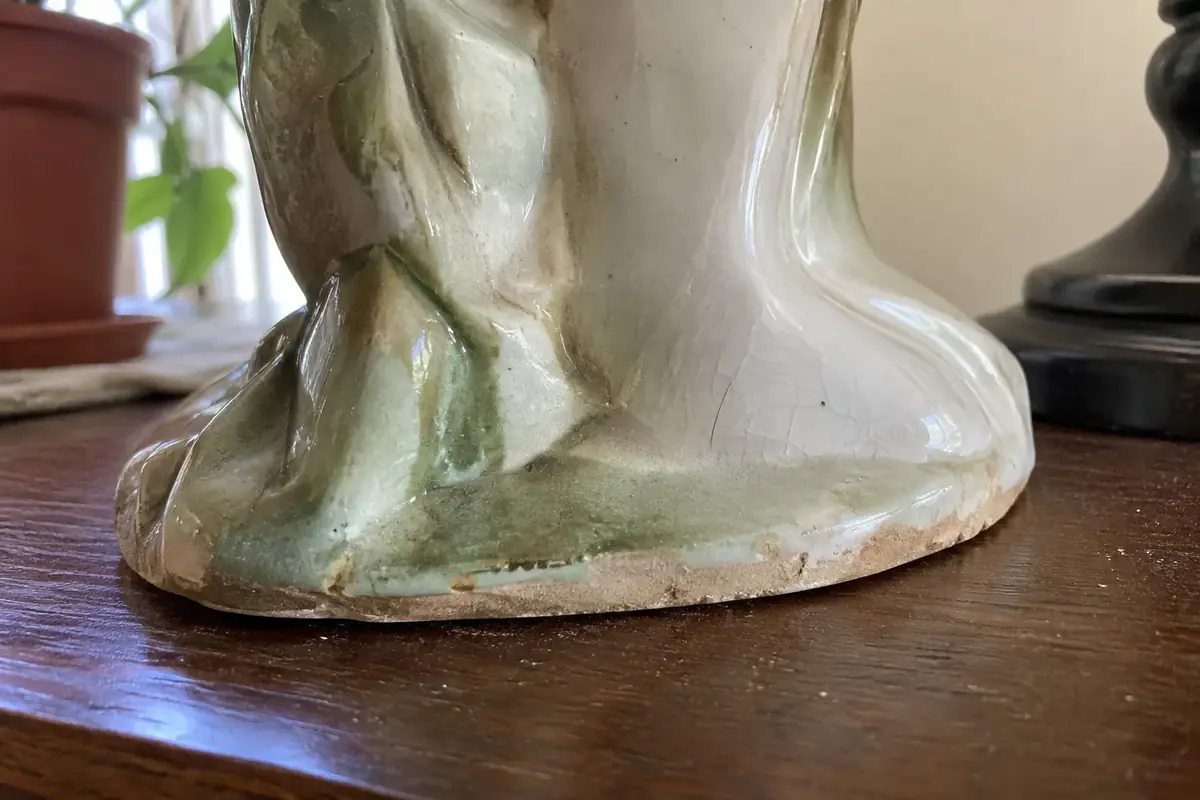
If the stamp on your base isn't in the table, the pottery marks index is a good next stop.
What makes one Hummel worth more than another
- The mark
- Earlier marks bring a premium. Lion and Unicorn says a crown-mark piece can be worth up to 20 times the same model made in TMK-6 or later.
- Size
- Bigger generally brings more. Jumbo Apple Tree Boy and Girl figures, 30 to 32 inches tall, sold for $2,200 to $2,500 each in 2021. "142/X" on the base marks the extra-large size.
- Rarity
- Limited runs beat the mass-produced favorites. Only 2,500 of Picture Perfect (HUM 2100) were made, and it lists at $1,000 to $2,000.
- Condition
- Chips, cracks, heavy crazing, paint loss and repairs all pull the value down, by more than half in one guide's estimate. Harsh cleaning and direct sun damage the glaze and colors.
- The box
- Original factory packaging generally adds value. Guides disagree on how much, from 10% to 25% up to ten times more for a pristine boxed piece.
- Demand
- As the generation that prized Hummels downsizes, more of them reach the market, and younger buyers show little interest.
“Most used Hummels now sell for no more than $75 in shops, with prices likely to continue to fall as more Hummels reach the market.”
— Kovels
Real Hummel or a look-alike?
A genuine Hummel has two things: a Goebel trademark on the base and the incised M.I. Hummel signature. Many look-alikes are legal copies of the Bavarian-children style, not fakes meant to fool anyone. Most were made in Asia, in Japan or China, and they lack the proper marks. Signs of a copy:
- A "Made in China" or "Made in Hong Kong" mark, or an "Original Hummel" sticker where a permanent mark should be
- It feels light. Many reproductions are plaster of Paris, not porcelain.
- A blurred or sloppy trademark
- Weaker color and sheen, or missing flowers, bags and other details next to the catalog photo
If yours carries a Japan stamp, the Occupied Japan mark guide explains it. For porcelain from another maker, see Lladró figurine values.
What are Hummel plates worth?
Far less than figurines. Plates at auction usually bring $20 to $50, and annual plates from 1971 to 1988 can reach $30 to $120. The annual series ran from 1971 to 1995, followed by Christmas plates and other series. As with figurines, condition and the original box matter. For mail-order series, see Bradford Exchange plate values.
Where to sell a Hummel
Match the venue to the value. Everyday pieces sell on eBay or Etsy. For mid-range and early pieces, try a porcelain auction house or a specialist site such as Ruby Lane. For an early-marked or large piece, or a whole collection, get a professional opinion first, with the mark, HUM number, height and condition notes to hand.
Common Hummel questions
Are Hummel figurines worth anything?
Yes, though usually modestly. The exceptions are the early-marked and tall pieces, which is why the base mark and height are worth checking first.
How can I tell how old my Hummel is?
Read the Goebel trademark on the base. The crown mark dates from 1935 to 1949, the bee marks follow through the 1950s to the 1970s, and the missing-bee mark runs from 1979 to 1990. Guides differ by a year or two at each boundary.
Are Hummel plates worth anything?
Not much, and far less than figurines. Expect roughly $25 to $35 for a typical plate.
Does the original box add value?
Yes, generally. Keep the box and any paperwork with the piece; guides disagree on how large the premium is.
How can I tell if my Hummel is a fake?
Compare it with a catalog photo of the same model. Copies often miss flowers, bags or other details, and their color and sheen look weaker.