Japanese Go Game Board Value Guide
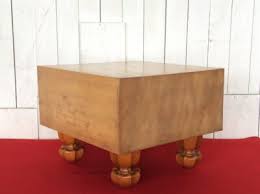
- Period
- 1920-1950
- Origin
- Japan
- Materials
- Wood
- Category
- Go game
This vintage Japanese Goban, dating from 1920 to 1950, represents a pinnacle of Showa-era craftsmanship featuring solid wood construction and iconic ball-shaped feet. Highly collectible for its historical connection to the samurai and aristocratic classes, these boards are prized for their resonant sound and aesthetic simplicity.
What Is Japanese Go Game Board Worth?
The typical price range for Japanese Go Game Board is $700 - $770 based on recent sales. However, values can vary depending on the item's condition, rarity, and other factors such as:
- The thickness of the wood block significantly impacts the market price, with thicker boards commanding higher values.
- Condition of the playing surface, specifically the absence of deep cracks or significant warping in the solid wood.
- The presence of original accessories, such as matching wooden bowls (Go-ke) and stones made of slate and shell.
- The specific type of wood used, with yellow-toned Kaya wood being the most valuable material for collectors.
How to Identify Japanese Go Game Board?
- Look for the traditional four-piece carved wooden feet shaped like stylized lotus petals or water chestnuts.
- Examine the playing surface for hand-drawn grid lines, which often show slight variations compared to modern machine-printed versions.
- Verify the solid wood construction, typically carved from a single thick block of Kaya or Spruce rather than laminated layers.
- Check for natural aging and patina on the wood surface consistent with the 1920-1950 production era.
History of Japanese Go Game Board
Go is an ancient strategy board game originating in China over 2,500 years ago. It arrived in Japan in the 7th century and quickly gained popularity, especially among the aristocracy and later the samurai class. Japanese Go boards, or Goban, are traditionally crafted from single pieces of wood, often kaya, and are highly prized for their craftsmanship and the quality of the playing surface. The game itself is revered for its simplicity and profound strategic depth.
Shop Similar
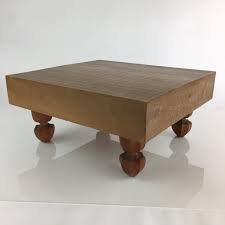
Japanese Wood Go Board GB61 | Online Shop | Authen…
chidorivintage.com · $160
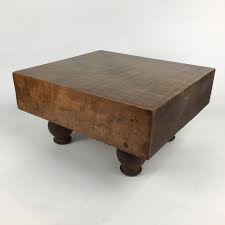
Japanese Wood Go Board Vtg Table Game Goban Leg He…
chidorivintage.com · $180
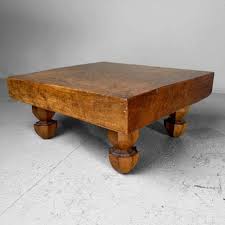
Go Game Board Goban Kaya, Japan, 1920s for sale at…
pamono.com · $665
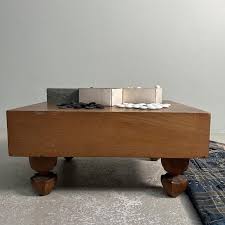
Vintage Go Game Board Goban Kaya, Japan, 1950s, Se…
chairish.com · $764
Go Board with Equipments Straight-grained Natural …
ebay.com · $965
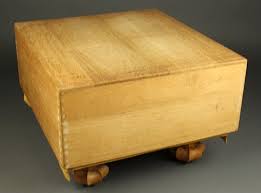
Kaya Go Game Board Set: Kaya Floor Board (goban) W…
etsy.com · $1544
Have an antique to identify?
Get an instant AI appraisal with values, history, and market insights.
Download for iPhone