Japanese Ink Wash Painting Value Guide
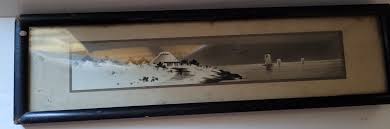
- Period
- 1900-1920
- Origin
- Japan
- Materials
- Ink, paper, wood, glass
- Category
- Japanese ink painting
This early 20th-century Sumi-e painting exemplifies the Zen Buddhist philosophy of capturing a subject's essence through minimalist ink strokes. Originating from the Taisho era, this piece showcases the traditional Japanese mastery of tonal depth using only black ink on paper.
What Is Japanese Ink Wash Painting Worth?
The typical price range for Japanese Ink Wash Painting is $150 - $200 based on recent sales. However, values can vary depending on the item's condition, rarity, and other factors such as:
- The preservation of the paper and the lack of foxing or water damage significantly impact the $150-$200 valuation.
- The quality of the ink gradients and the artist's ability to create texture with single brushstrokes.
- The presence of an artist's seal or signature, which can elevate the piece within its estimated price range.
- The integrity of the original wood frame and glass from the 1900-1920 period.
How to Identify Japanese Ink Wash Painting?
- Check for the characteristic deliberate and expressive brushwork typical of 1900-1920 Japanese landscape artistry.
- Verify the use of traditional black ink (Sumi) which creates a distinct range of grey tones on period-accurate paper.
- Look for the specific minimalist composition featuring a lone tree and water, a hallmark of Zen-influenced natural themes.
- Examine the wood and glass frame for age-appropriate wear consistent with an early 20th-century origin.
History of Japanese Ink Wash Painting
Ink wash painting, or Sumi-e, is an East Asian art form that originated in China during the Tang Dynasty and was introduced to Japan by Zen Buddhist monks in the 14th century. It emphasizes simplicity and the essence of nature, often using only black ink to create a range of tones and textures. Artists typically use a brush to apply ink to paper or silk, with each stroke being deliberate and expressive. The art form is deeply rooted in Zen philosophy, focusing on capturing the spirit of the subject rather than a literal representation. This piece exemplifies the minimalist aesthetic and the serene natural themes characteristic of the style.
Shop Similar
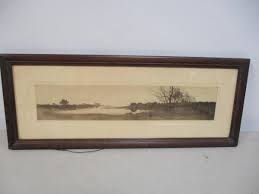
1890 Radtke Lauckner NY Etching | EstateSales.org
estatesales.org · $12

Vintage Picture of an Asian Scene With Mount Fuji …
etsy.com · $48

Asian Ink Wash Painting - Etsy
etsy.com · $75
Antique Oriental Framed Picture Horizontal 16.75"x…
ebay.com · $120
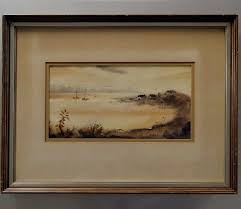
Vintage Watercolor Landscape Painting Original Gen…
ebay.com · $265
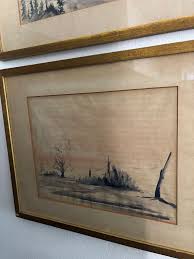
Vintage French Watercolor Serene Landscape, a Pair…
chairish.com · $375
Have an antique to identify?
Get an instant AI appraisal with values, history, and market insights.
Download for iPhone