Japanese Okimono Value Guide
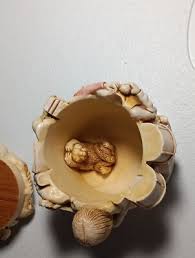
- Period
- Meiji period, 1868-1912
- Origin
- Japan
- Materials
- Bone or ivory
- Category
- Japanese sculpture
Japanese Okimono from the Meiji period (1868-1912) represent a pivotal shift in craftsmanship as carvers transitioned from functional netsuke to purely decorative export art. These intricate bone or ivory figures are highly collectible for their detailed depictions of folklore, nature, and daily life designed specifically for Western display.
What Is Japanese Okimono Worth?
The typical price range for Japanese Okimono is $230 - $275 based on recent sales. However, values can vary depending on the item's condition, rarity, and other factors such as:
- Material authenticity, with genuine ivory typically commanding higher interest than bone, provided it meets legal trade regulations.
- The complexity of the scene, where multi-figure compositions or intricate folklore depictions increase the market value.
- Physical condition, specifically the absence of hairline cracks, yellowing, or missing delicate extremities like fingers or tools.
- Provenance and artist signatures, which can elevate the price within the $230 to $275 range for well-documented pieces.
How to Identify Japanese Okimono?
- Examine the base for a lack of 'himotoshi' holes, which distinguishes decorative okimono from functional netsuke.
- Look for the fine, cross-hatched Schreger lines characteristic of authentic ivory or the porous grain structure of polished bone.
- Check for detailed Meiji-era carving techniques, particularly in the expressive facial features and the folds of the figure's traditional garments.
- Inspect the underside for a red lacquer seal or an incised signature from the Meiji period artist.
History of Japanese Okimono
Okimono are Japanese decorative carvings, similar to netsuke, but not necessarily designed to be attached to a cord. They emerged during the Meiji period as Japanese carvers, no longer needing to produce netsuke for traditional attire, turned their skills to creating purely aesthetic objects for export and display in Western homes. These detailed carvings often depict scenes from folklore, nature, or everyday life, showcasing exceptional artistry.
Shop Similar
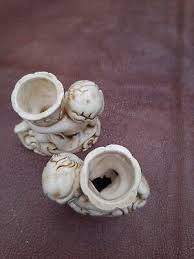
Vintage Pair of Aged Ceramic Cherub Christmas Cand…
ebay.com · $12
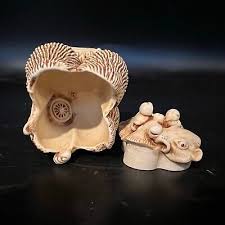
Vintage Harmony Kingdom “Close Shave” Treasure Jes…
ebay.com · $24
Harmony Kingdom Treasure Jest Lidded Box OPEN MIKE…
ebay.com · $28
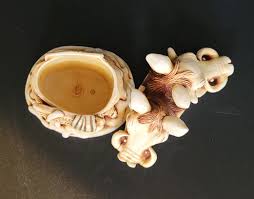
Warthogs Harmony Kingdom Mud Bath Made in England …
etsy.com · $31
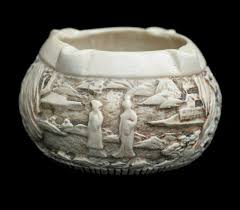
Vintage Asian Oriental Geisha Motive Hand Carved F…
etsy.com · $48
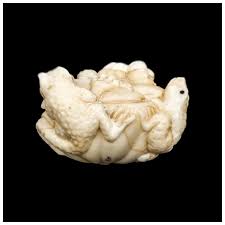
Meiji period Japanese bone signed okimono / netsuk…
rubylane.com · £250
Related Items
Have an antique to identify?
Get an instant AI appraisal with values, history, and market insights.
Download for iPhone