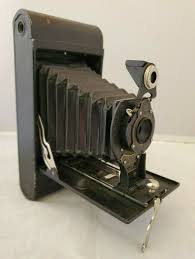
Kodak No. 3A Folding Autographic Brownie Value Guide
- Period
- 1914-1926
- Origin
- United States
- Materials
- Metal, Leatherette, Glass, Wood
- Category
- Kodak camera
The Kodak No. 3A Folding Autographic Brownie is a landmark of early 20th-century photography, prized for its innovative 'Autographic' feature that allowed users to scribe notes directly onto film. Its ability to produce large, postcard-sized prints without an enlarger made it a staple for American family documentation between 1914 and 1926.
What Is Kodak No. 3A Folding Autographic Brownie Worth?
The typical price range for Kodak No. 3A Folding Autographic Brownie is $135 - $148 based on recent sales. However, values can vary depending on the item's condition, rarity, and other factors such as:
- The presence and condition of the original metal stylus significantly impacts the $135-$148 value range.
- Structural integrity of the bellows, specifically the absence of light leaks or dry rot in the leatherette.
- Functional clarity of the glass lens and the smooth operation of the folding mechanism.
- Overall cosmetic condition of the metal body and the legibility of the Autographic door markings.
How to Identify Kodak No. 3A Folding Autographic Brownie?
- Look for the small metal 'Autographic' door on the back of the camera housing.
- Verify the presence of the original metal stylus used for writing on the film margin.
- Check for the vertical orientation and the specific 'No. 3A' branding on the interior or faceplate.
- Inspect the bellows for the characteristic black leatherette finish over the metal frame.
History of Kodak No. 3A Folding Autographic Brownie
Introduced in 1914, the Autographic feature allowed photographers to write notes directly onto the film margin through a small door on the back of the camera using a metal stylus. This model was highly popular for its ability to produce large prints without the need for an enlarger, making it a favorite for family documentation in the early 20th century.
Shop Similar
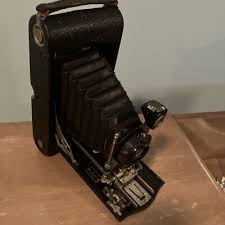
Kodak Autographic Film No.A-122 Camera - Totally A…
ebay.com · $35
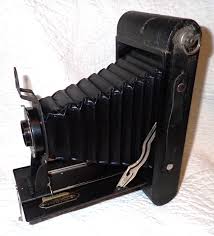
Kodak Model B No. 3A Folding Camera - Etsy
etsy.com · $74
Antique Kodak No. 2 Folding Cartridge Hawk-Eye Cam…
ebay.com · $79
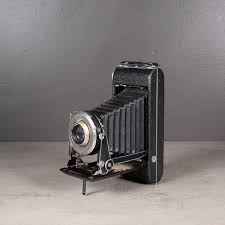
Art Deco Kodak Senior Six-16 Folding Camera c.1937…
s16home.com · $140
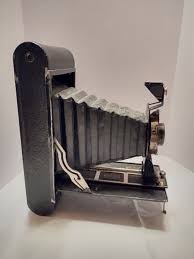
No.3A Folding Autographic Brownie Camera - Unteste…
ebay.com · $145
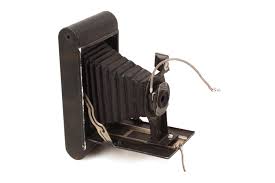
Vintage Eastman Kodak No.3a Folding Hawk-eye Model…
etsy.com
Related Items
Have an antique to identify?
Get an instant AI appraisal with values, history, and market insights.
Download for iPhone