Lindner Kueps Bavaria Echt Cobalt Vase Value Guide
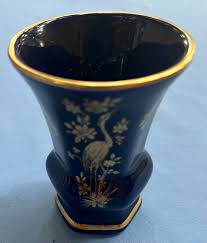
- Period
- 1950-1970
- Origin
- Germany
- Materials
- Porcelain, cobalt glaze, gold gilding
- Category
- Lindner kueps
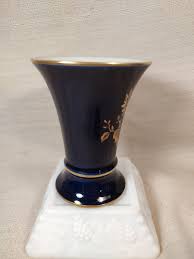
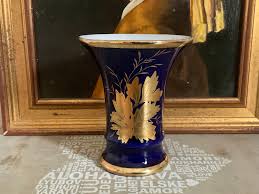
The Lindner Kueps Bavaria Echt Cobalt vase is a premier example of mid-20th-century German porcelain artistry, distinguished by its use of genuine cobalt oxide. These pieces are highly collectible for their 'Echt Cobalt' (Real Cobalt) glaze, which produces a deep, light-absorbing blue that serves as a dramatic backdrop for intricate gold gilding.
What Is Lindner Kueps Bavaria Echt Cobalt Vase Worth?
The typical price range for Lindner Kueps Bavaria Echt Cobalt Vase is $55 - $60 based on recent sales. However, values can vary depending on the item's condition, rarity, and other factors such as:
- The presence and preservation of the delicate gold butterfly and floral motifs significantly impact the $55-$60 price point.
- Condition of the gold trim, as rubbing or wear from handling can decrease the item's market value.
- The clarity and depth of the cobalt glaze, which must be free of scratches or firing defects to reach top-tier pricing.
- The specific size and shape of the vase, with more unique silhouettes often commanding the higher end of the value range.
How to Identify Lindner Kueps Bavaria Echt Cobalt Vase?
- Check the base for the 'Lindner Kueps Bavaria' backstamp accompanied by the 'Echt Cobalt' designation.
- Inspect the gold floral and butterfly motifs for sharp, fine-lined detailing characteristic of high-quality German gilding.
- Verify the glaze color; authentic Echt Cobalt should be a uniform, intense dark blue without streaks or thinning.
- Look for the specific gold trim accents on the rim and base that are synonymous with the 1950-1970 production era.
History of Lindner Kueps Bavaria Echt Cobalt Vase
Lindner Kueps Bavaria is a renowned German porcelain manufacturer. Their 'Echt Cobalt' line, meaning 'Real Cobalt', refers to the use of genuine cobalt oxide in the glaze to achieve its distinctive deep blue color. This technique, requiring careful firing, was highly prized and became a hallmark of quality German porcelain, particularly popular in the mid-20th century.
Shop Similar
TWO Bareuther Waldsassen Bavaria BTH 90 Echt Cobal…
ebay.com · $20
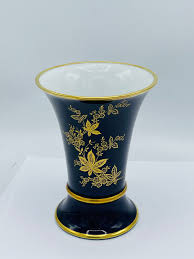
Lindner Bavaria Echt Cobalt Blue & Gold Fluted Vas…
etsy.com · $43
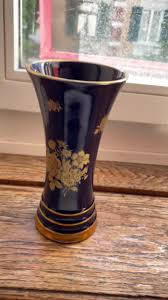
Vintage Retsch &co Wunsiedel Bavaria Porсellan Vas…
etsy.com · $51
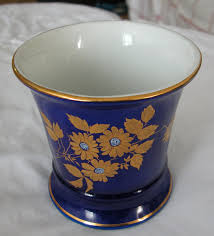
A Vintage Blue Porcelain Vase Produced By T.K Burg…
ebay.com · $60
Jeannette Echt Cobalt Cased Blue Bud Vase Gold Flo…
ebay.com
Colbalt Blue KPM Royal Bavarian Posy Vase With Gol…
etsy.com
Have an antique to identify?
Get an instant AI appraisal with values, history, and market insights.
Download for iPhone