Manufacturers Advertising Company Ukelin Value Guide
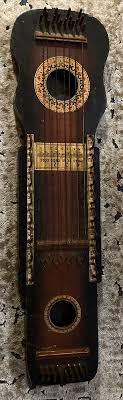
- Period
- 1920-1940
- Origin
- United States
- Materials
- Wood, steel wire, decals
- Category
- Mfg adv co ukelin
The Ukelin is a distinctive American fretless zither hybrid patented by Paul Richter in 1926 and sold primarily through door-to-door sales. It gained fame as a 'parlor instrument' that combined bowed melody strings with plucked harmony strings, though its complex tuning made it more popular as a decorative piece than a musical staple.
What Is Manufacturers Advertising Company Ukelin Worth?
The typical price range for Manufacturers Advertising Company Ukelin is $100 - $110 based on recent sales. However, values can vary depending on the item's condition, rarity, and other factors such as:
- Condition of the original decals and the integrity of the wooden soundboard, as cracks significantly decrease value.
- Presence of original accessories, specifically the specialized bow and the numbered song sheets or instruction manuals.
- Functionality of the tuning pins, as these instruments are notoriously difficult to keep in tune due to their age and design.
- Completeness of the 32 steel strings, as restringing a Ukelin can be labor-intensive and costly for collectors.
How to Identify Manufacturers Advertising Company Ukelin?
- Look for the 'Manufacturers Advertising Company' label or decal often located inside the sound hole or on the face.
- Identify the unique dual-string arrangement featuring 16 melody strings played with a bow and 16 chord strings meant for plucking.
- Check for the characteristic numbered chart system printed directly on the wood to guide the player.
- Verify the construction materials, which typically consist of a wooden soundbox with steel wire strings and decorative decals.
History of Manufacturers Advertising Company Ukelin
Patented in 1926 by Paul Richter, the Ukelin was primarily sold door-to-door by traveling salesmen. It was marketed as an instrument that anyone could learn easily using a numbered chart system. While it sounds like a cross between a zither and a violin, it was famously difficult to keep in tune, leading many to become decorative wall pieces rather than functional instruments.
Shop Similar
Ukelin Manufacturer's Advertising Co. Jersey City,…
ebay.com · $50
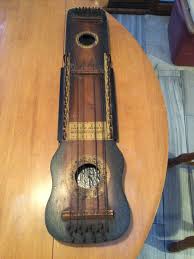
Vintage Musical UKELIN | eBay
ebay.com · $70
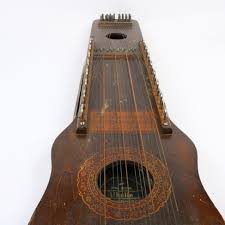
Antique 1920's Ukelin by The Bosstone Co. – ERM Th…
ermthrift.com · $75
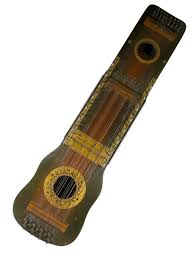
1920's Ukelin Manufacturer's Advertising Musical C…
ebay.com · $121
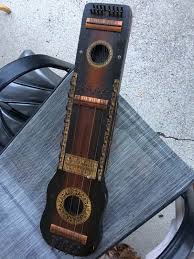
1920's Ukelin Manufacturers Advertising Co. Violin…
reverb.com · $249
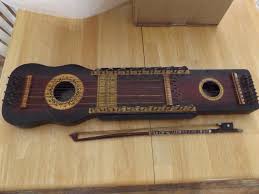
Vintage Ukelin Music String Instrument With Bow / …
etsy.com
Have an antique to identify?
Get an instant AI appraisal with values, history, and market insights.
Download for iPhone