Molcajete and Tejolote Value Guide
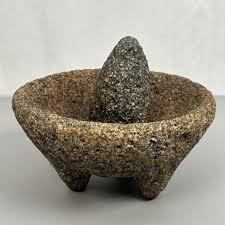
- Period
- 1950s-1970s
- Origin
- Mexico
- Materials
- Volcanic rock, Basalt
- Category
- Molcajete
This mid-century Molcajete and Tejolote set represents a culinary tradition dating back to the Aztecs and Mayans, hand-carved from a single block of vesicular basalt. These 1950s-1970s examples are highly collectible for their seasoned surfaces and the authentic, superior texture they provide to salsas compared to modern appliances.
What Is Molcajete and Tejolote Worth?
The typical price range for Molcajete and Tejolote is $50 - $70 based on recent sales. However, values can vary depending on the item's condition, rarity, and other factors such as:
- Condition of the basalt, specifically looking for cracks or significant chips in the legs or rim.
- The presence of the original matching Tejolote, as these are often lost or replaced over decades.
- Level of 'seasoning' or smoothness in the grinding well, which indicates years of culinary use and heritage.
- Size and weight, with larger, deeper basins typically fetching the higher end of the $50-$70 price range.
How to Identify Molcajete and Tejolote?
- Look for the characteristic porous, pitted texture of authentic vesicular basalt rather than smooth concrete imitations.
- Check for three integral legs carved from the same single piece of volcanic rock as the bowl.
- Examine the Tejolote (pestle) for wear patterns consistent with manual grinding rather than machine shaping.
- Verify the weight; authentic volcanic rock is significantly heavier and denser than modern composite replicas.
History of Molcajete and Tejolote
The molcajete is a culinary tool with a rich history dating back thousands of years to pre-Hispanic Mesoamerican cultures. It was, and still is, an essential kitchen implement for indigenous peoples of Mexico, particularly the Aztecs and Mayans. The word 'molcajete' comes from the Nahuatl word 'molcaxitl', meaning 'bowl' or 'sauce bowl'. These tools are traditionally carved from a single piece of vesicular basalt, a type of volcanic rock, which gives them their characteristic rough texture perfect for grinding. They were not only practical but also held cultural significance, often passed down through generations. Today, they remain a beloved staple in Mexican kitchens worldwide, cherished for the authentic flavors they impart to food that modern blenders simply cannot replicate.
Shop Similar
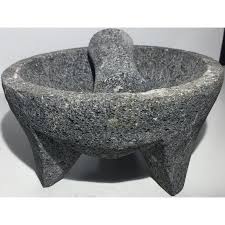
7"" Large Mexican Piedra Negra Molcajete/Tejolote …
walmart.com · $40
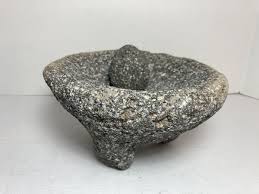
Vintage Lava Rock Mortar and Pestle 7.25” | eBay
ebay.com · $45
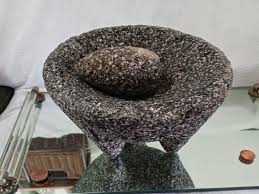
Mortar Pestle, Spanish is a Molcajete, Mexican Mor…
etsy.com · $48
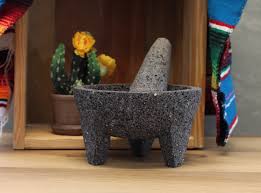
Cultural Bowl & Pestle - Lava Stone - 8 Inch - - A…
pestlefresh.com · $62
VTG Mexican Molcajete & Tejolote Granite Mortar & …
ebay.com · $65
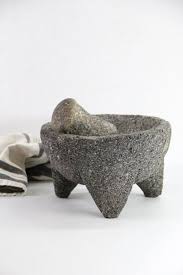
Vintage Molcajete | Basalt Stone Mortar & Pestle 2…
debrahalllifestyle.com · $79
Have an antique to identify?
Get an instant AI appraisal with values, history, and market insights.
Download for iPhone