Panabas Value Guide
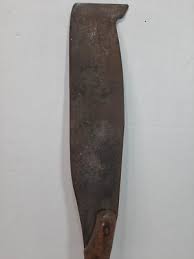
- Period
- 19th-early 20th century
- Origin
- Philippines
- Materials
- Wood, steel
- Category
- Filipino sword
The Panabas is a formidable Moro weapon from Mindanao, distinguished by its forward-curving blade that transitions from a tool for clearing vegetation to a lethal instrument of combat and execution. Its historical significance as a symbol of authority and its unique 'cleaver' profile make it a highly sought-after piece for collectors of Southeast Asian militaria.
What Is Panabas Worth?
The typical price range for Panabas is $700 - $800 based on recent sales. However, values can vary depending on the item's condition, rarity, and other factors such as:
- Blade condition and the presence of original 'pamor' or lamination patterns in the steel.
- The intricacy of the hilt carvings and the integrity of the rattan or silver wire wraps.
- Historical provenance or evidence of use by Moro warriors or executioners during the 19th century.
- Overall length and weight, with larger, well-balanced examples typically reaching the $700-$800 price range.
How to Identify Panabas?
- Examine the blade for a distinct forward curve that widens towards the tip, resembling a large cleaver or scimitar.
- Look for a long, two-handed hilt typically made of hardwood, often wrapped in rattan or featuring metal ferules.
- Check for authentic 19th to early 20th-century forging marks on the steel, which should show age-appropriate patina and lamination.
- Verify the absence of a handguard, as traditional Panabas designs rely on the length of the handle and blade weight for balance.
History of Panabas
The Panabas is a weapon originating from the southern Philippines, particularly among the Moro people of Mindanao. Its name means 'chopper' or 'cleaver' and reflects its utility beyond warfare; it was also used for clearing vegetation and other heavy-duty tasks. Historically, the Panabas was a significant weapon in tribal conflicts and was notably used by executioners. Its large, curved blade and often ornate hilt made it a formidable and culturally important item.
Shop Similar
Vintage Collins Tobacco Sugar Cane Knife Machete C…
ebay.com
Traditional Obsidian Blade - Etsy
etsy.com
F. Grah. Giant Straight Razor Trade Sign.
liveauctioneers.com
Vintage Dartmouth Wood Skis - VintageWinter
vintagewinter.com
19th C. Sioux Gunstock War Club ex-C.M. Russell so…
bidsquare.com
WWII Gurkha Knife & Sheath - India #8974 | Auction…
auctionninja.com
Related Items
Have an antique to identify?
Get an instant AI appraisal with values, history, and market insights.
Download for iPhone