Pepsi-Cola Tin Sign Value Guide
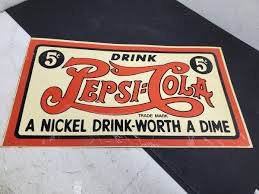
- Period
- 1930-1950
- Origin
- United States
- Materials
- Tin
- Category
- Pepsi-cola
This vintage Pepsi-Cola tin sign is a quintessential piece of Americana, representing the brand's aggressive 1930s-1950s marketing campaign that emphasized value. Featuring the famous 'A Nickel Drink-Worth A Dime' slogan, these signs are highly collectible for their bold typography and historical connection to Caleb Bradham's legacy.
What Is Pepsi-Cola Tin Sign Worth?
The typical price range for Pepsi-Cola Tin Sign is $150 - $200 based on recent sales. However, values can vary depending on the item's condition, rarity, and other factors such as:
- Overall paint condition, specifically the lack of significant rusting or fading on the central '5 cents' graphic.
- The presence of original mounting holes and the lack of modern reproduction marks or barcodes.
- Market demand for the specific 'Worth A Dime' phrasing, which typically commands prices between $150 and $200.
- Structural integrity of the tin, including the absence of major bends or metal fatigue from environmental exposure.
How to Identify Pepsi-Cola Tin Sign?
- Check for the specific 'A Nickel Drink-Worth A Dime' slogan which was a hallmark of Pepsi's mid-century value proposition.
- Verify the material is authentic lithographed tin, common for United States production between 1930 and 1950.
- Look for age-appropriate wear on the edges and mounting holes, as these signs were originally displayed in diners and gas stations.
- Examine the color palette for the deep reds and blues characteristic of the early to mid-20th century Pepsi-Cola branding.
History of Pepsi-Cola Tin Sign
Pepsi-Cola began in 1893, created by Caleb Bradham. Originally named Brad's Drink, it was renamed Pepsi-Cola in 1898. This particular sign reflects the brand's early to mid-20th century marketing, emphasizing its value and affordability. Such signs were ubiquitous in general stores, diners, and gas stations across America, serving as colorful reminders of the era's popular culture and consumer habits.
Shop Similar
Pepsi Vintage Brand Wall Art Metal Signs – Aesthet…
aestheticwalldecor.com · $17
Vintage 5cent Drink Pepsi-Cola tin sign A Nickel-D…
ebay.com · $20
Sold at Auction: Vintage Drink Pepsi-Cola 5 Cent S…
invaluable.com · $25
Vintage Pepsi Cola ad Bath Towel by Les Palenik - …
les-palenik.pixels.com · $35
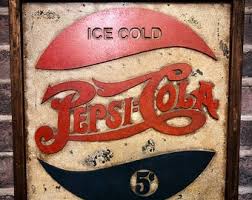
Vintage Pepsi Cola Vintage Sign - Etsy
etsy.com · $218
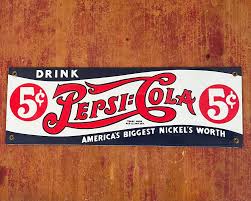
Vintage Drink Pepsi Cola Porcelain Sign 18” X 6” N…
etsy.com
Related Items
Have an antique to identify?
Get an instant AI appraisal with values, history, and market insights.
Download for iPhone