Plaster Wall Bracket Value Guide
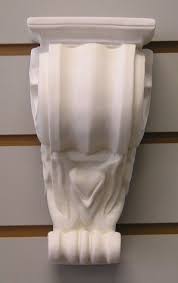
- Period
- 1920-1940
- Origin
- United States
- Materials
- Plaster
- Category
- Plaster decor
This 1920-1940 American plaster wall bracket represents a period when classical architectural elements were miniaturized for domestic interior decoration. These pieces are highly collectible for their ability to add immediate Neoclassical character and historical depth to modern wall displays.
What Is Plaster Wall Bracket Worth?
The typical price range for Plaster Wall Bracket is $80 - $120 based on recent sales. However, values can vary depending on the item's condition, rarity, and other factors such as:
- The preservation of delicate plaster edges and the lack of significant chipping on the ornate acanthus leaf tips.
- The presence of original finishes or desirable 'shabby chic' weathering that enhances the classical aesthetic.
- Structural integrity of the mounting points, as plaster can become brittle over several decades.
- Market demand for US-made architectural salvage from the early 20th century, typically valued between $80 and $120.
How to Identify Plaster Wall Bracket?
- Look for the distinct hand-cast texture and weight characteristic of early 20th-century American plaster production.
- Verify the presence of traditional classical motifs including deep-relief acanthus leaves and symmetrical volute scrolls.
- Check the reverse side for period-appropriate mounting hardware or wire loops integrated directly into the plaster mold.
- Examine the surface for a natural aged patina or multiple layers of historical paint which indicate an authentic 1920s-1940s origin.
History of Plaster Wall Bracket
Decorative plasterwork has been used since ancient times, evolving from simple functional elements to elaborate artistic statements. During the 18th and 19th centuries, plaster brackets and corbels became popular in European and American homes, adding architectural detail and supporting small display items or curtain rods. Their design often drew inspiration from classical Greek and Roman architecture, featuring motifs like volutes, acanthus leaves, and other ornate carvings.
Shop Similar
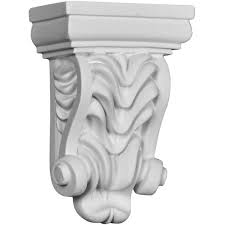
Endurathane Alexandria Corbel, 3"W x 1 5/8"D x 4 3…
ekenamillwork.com · $8
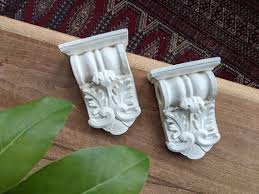
Pair of Crown Molding Curtain Rod Holders | Ornate…
etsy.com · $64
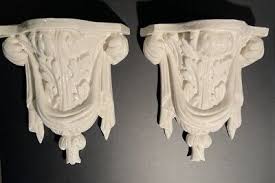
Vintage Pair Of Classical Ceramic Italian Made Wal…
ebay.com · $145
7539 Art Deco Scroll Corbel Shelf Bracket Latex Fi…
ebay.com · $265
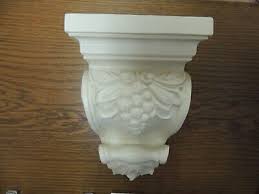
1 New Resin Grape Corbel, Furniture, Cabinet, Hdwe…
ebay.com
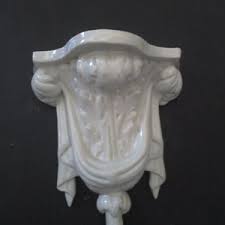
Art Nouveau Shelf - Etsy
etsy.com
Have an antique to identify?
Get an instant AI appraisal with values, history, and market insights.
Download for iPhone