Portuguese Azulejo Tiles Value Guide
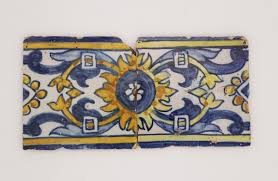
- Period
- 1630-1680
- Origin
- Portugal
- Materials
- Ceramic, Tin-glaze, Cobalt, Manganese
- Category
- Portuguese tiles
These 17th-century Portuguese Azulejo tiles represent a pinnacle of Baroque decorative art, showcasing the intricate Padrao geometric and floral motifs popular between 1630 and 1680. As essential elements of Portuguese architectural history, these tin-glazed ceramics are highly sought after for their distinct cobalt and manganese palette.
What Is Portuguese Azulejo Tiles Worth?
The typical price range for Portuguese Azulejo Tiles is $750 - $825 based on recent sales. However, values can vary depending on the item's condition, rarity, and other factors such as:
- The preservation of the cobalt and manganese pigments against the white glaze significantly impacts the $750-$825 valuation.
- Structural integrity of the ceramic, specifically the lack of major chips or cracks in the delicate tin-glaze surface.
- The rarity of finding a matched pair from the 1630-1680 era that maintains a cohesive Padrao pattern.
- Historical provenance linking the tiles to specific Portuguese Baroque architectural sites.
How to Identify Portuguese Azulejo Tiles?
- Look for the specific 'Padrao' style which features repeating geometric patterns integrated with floral elements.
- Verify the authentic 17th-century color palette consisting of cobalt blue and manganese yellow on a white tin-glaze ground.
- Examine the reverse side for characteristic coarse ceramic texture consistent with 1630-1680 production methods.
- Check for the slight irregularities in the hand-painted tin-glaze that distinguish pre-industrial tiles from later reproductions.
History of Portuguese Azulejo Tiles
These tiles, known as Azulejos, are a hallmark of Portuguese architecture and decorative arts. Following the 1755 Lisbon earthquake, demand for these tiles surged to decorate new buildings. This specific 'Padrao' style reflects the influence of the Baroque period, utilizing a limited color palette of cobalt blue and manganese yellow on a white tin-glaze ground.
Shop Similar
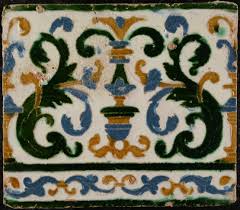
Fine and Rare Hispano-moresque Tile – Toledo, Spai…
etsy.com · €199
17th Century Floral Set of Two Tiles, Portuguese A…
ebay.com · $349
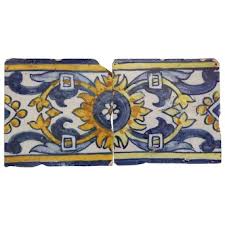
Similar Items to 17th Century Floral Set of Two Ti…
rubylane.com · $349
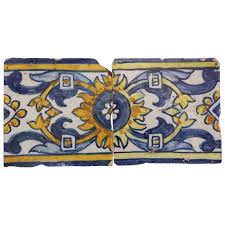
17th Century Floral Set of Two Tiles, Portuguese A…
rubylane.com · $349
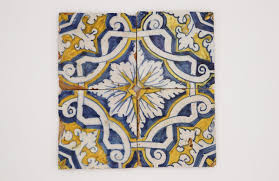
17th Century Antique Tiles, Set of Four, Portugues…
ebay.com · $399
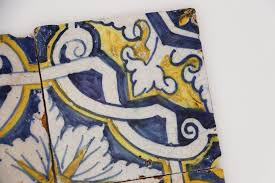
17th Century Antique Tiles, Set of Four, Portugues…
chairish.com · $399
Have an antique to identify?
Get an instant AI appraisal with values, history, and market insights.
Download for iPhone