Regency Convex Mirror Value Guide
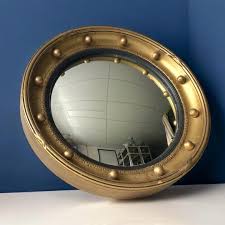
- Period
- 1800-1830
- Origin
- United Kingdom
- Materials
- Gilded wood, glass
- Category
- Regency decor
The Regency convex mirror is a hallmark of early 19th-century English design, prized for its ability to reflect an entire room from a single vantage point. Originally used by butlers to discreetly monitor dining service, these 'banker's mirrors' are now highly collectible for their brilliant gilded frames and historical charm.
What Is Regency Convex Mirror Worth?
The typical price range for Regency Convex Mirror is $700 - $850 based on recent sales. However, values can vary depending on the item's condition, rarity, and other factors such as:
- The condition and authenticity of the original water gilding on the wooden frame.
- The presence of all original decorative spheres and any additional carvings like an eagle pediment.
- The clarity and age of the convex glass, as original 19th-century glass often has minor foxing.
- Market demand for English Regency pieces, currently placing values in the $700 to $850 range.
How to Identify Regency Convex Mirror?
- Look for a circular frame crafted from gilded wood, typically dating between 1800 and 1830.
- Check for the presence of decorative spheres or 'balls' evenly spaced within the frame's cove molding.
- Examine the glass for a distinct outward curvature that creates a wide-angle reflection of the surrounding space.
- Verify the origin as the United Kingdom, often featuring eagle or foliate cresting on more ornate examples.
History of Regency Convex Mirror
Convex mirrors, also known as 'butler's mirrors' or 'banker's mirrors', gained popularity in the Regency era in England, primarily between 1800 and 1830. Their curved surface allowed butlers to observe activities in the entire dining room from a single vantage point without turning their backs on guests. They were also believed to ward off evil and bring good fortune. Later, they became admired for their decorative qualities, especially their ability to visually expand a room and reflect light, often being placed opposite a window or chandelier.
Shop Similar
MINIATURE VINTAGE 60'S ROUND REGENCY STYLE PLASTER…
ebay.ca · £70
Old Butlers Mirror - Vintage - 20th Century - Rege…
etsy.com · $201
Birch Lane™ Bostwick Accent Mirror & Reviews | Way…
wayfair.com · $544
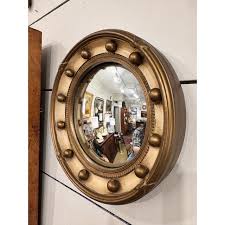
Antique Gold Convex Accent Mirror | Chairish
chairish.com · $750
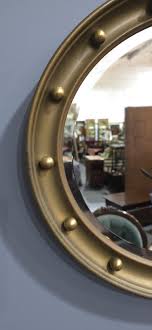
Victorian Gilt Mirror For Sale at 1stDibs
1stdibs.com · $813
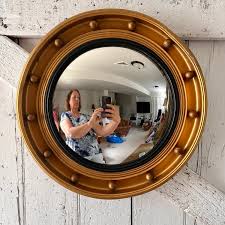
Mirror Convex Mirror Round Porthole Mirror Wood Pa…
etsy.com
Have an antique to identify?
Get an instant AI appraisal with values, history, and market insights.
Download for iPhone