Rococo Style Mirror Value Guide
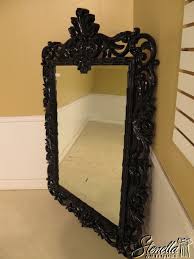
- Period
- 1730-1760
- Origin
- France
- Materials
- Wood, lacquer, glass
- Category
- Rococo mirrors
This mid-18th century French floor mirror epitomizes the Rococo movement's shift toward lightness and grace as a reaction to heavy Baroque styles. Its large scale and intricate black lacquered wood frame showcase the period's preference for asymmetrical, curvilinear forms and naturalistic motifs.
What Is Rococo Style Mirror Worth?
The typical price range for Rococo Style Mirror is $1,400 - $1,700 based on recent sales. However, values can vary depending on the item's condition, rarity, and other factors such as:
- The preservation of the black lacquer finish and the intricacy of the foliate carvings significantly impact the $1,400-$1,700 price point.
- Structural integrity of the large-scale wooden frame, specifically the absence of major cracks or missing ornamental elements.
- Provenance and historical documentation linking the piece to its 18th-century French origin.
- The condition of the glass, where original period glass often commands a premium over modern replacements.
How to Identify Rococo Style Mirror?
- Look for characteristic C-scrolls, S-scrolls, and shell-like 'rocaille' motifs carved into the wooden frame.
- Verify the presence of authentic 18th-century lacquer techniques, which should show age-appropriate crazing or patina.
- Examine the glass for slight imperfections or silvering degradation consistent with mid-1700s manufacturing.
- Check for hand-carved joinery on the reverse side of the frame, typical of French craftsmanship between 1730 and 1760.
History of Rococo Style Mirror
The Rococo style, originating in 18th-century France, is characterized by its elaborate ornamentation, asymmetry, and emphasis on lightness and grace. It emerged as a softer, more playful reaction to the grandeur of the Baroque, often incorporating natural motifs like shells, foliage, and curvilinear forms. Mirrors from this period were highly prized as decorative items and often featured gilded or lacquered frames to enhance their luxurious appeal.
Shop Similar
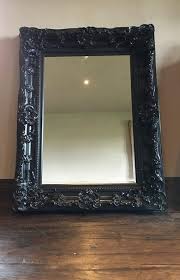
Heavy Chunky Wood Matt Black Large Statement Swept…
etsy.com · $498
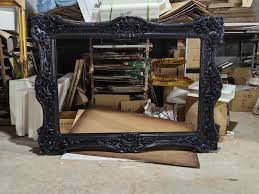
Large Antique Gold Full Length Freestanding Mirror…
alibaba.com · $500
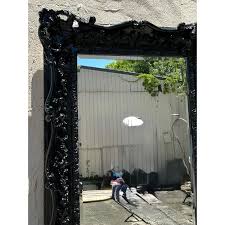
Vintage Black Lacquered Rococo Tall Mirror For Sal…
1stdibs.com · $1650
38179EC: FRIEDMAN BROTHERS #7244 Monumental Black …
ebay.com · $1795
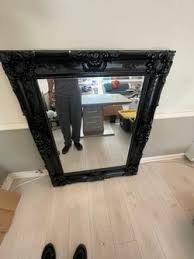
Black Vintage Mirror for Sale in Los Angeles, CA -…
offerup.com
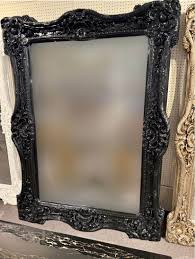
New! throne mirror🪞 We help you with financing 💥…
facebook.com
Have an antique to identify?
Get an instant AI appraisal with values, history, and market insights.
Download for iPhone