Rosko Battery Powered Bartender Value Guide

- Period
- 1960s
- Origin
- Japan
- Materials
- Tin, Plastic, Fabric
- Category
- Rosco toy
The Rosko Battery Powered Bartender is a quintessential example of post-war Japanese mechanical ingenuity, often modeled after the popular 1950s character Charlie Weaver. This whimsical toy is highly collectible for its complex multi-action movement, which includes shaking a cocktail, pouring a drink, and 'smoking' from its ears.
What Is Rosko Battery Powered Bartender Worth?
The typical price range for Rosko Battery Powered Bartender is $150 - $150 based on recent sales. However, values can vary depending on the item's condition, rarity, and other factors such as:
- Mechanical functionality is critical; toys that still shake, pour, and produce 'smoke' command the highest prices.
- The presence and condition of the original box can significantly increase the value beyond the $150 baseline.
- Corrosion in the battery compartment from old leaked batteries can drastically reduce the item's market worth.
- The cleanliness of the fabric elements and the lack of fading in the lithographed tin affect overall desirability.
How to Identify Rosko Battery Powered Bartender?
- Check for the original 'Rosko Tested' logo and 'Made in Japan' stamp on the battery compartment or base.
- Verify the presence of the original fabric clothing, which should include a clean white apron and a checkered shirt.
- Ensure the face is made of the correct lithographed tin or soft vinyl consistent with 1960s manufacturing.
- Look for the original colorful box, which features vibrant mid-century graphics and the Rosko branding.
History of Rosko Battery Powered Bartender
The Rosko Battery Powered Bartender toy, often associated with the character Charlie Weaver, became a popular novelty item in the 1950s and 1960s. These types of animated tin toys were a staple of Japanese manufacturing during the post-war economic boom, reflecting a period of playful and intricate mechanical design. They were primarily marketed to children, but also appealed to adults with their whimsical actions and sometimes humorous, if stereotypical, representations.
Shop Similar
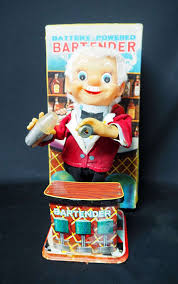
Vintage Tin Litho Mechanical Toys, Including 1960s…
bids.auctionbymayo.com · $10

Non-Functioning 1950's Rosko Bartender Battery Ope…
rubylane.com · $20
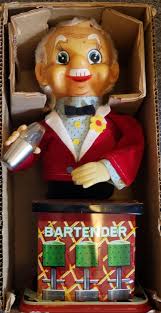
Lot - Rosko Toys Battery Powered Bartender with Re…
linkauctiongalleries.com · $35
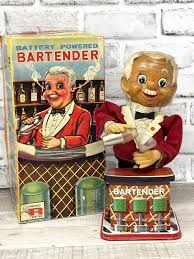
Vintage 60s Rosko Bartender Battery Powered Tin To…
ebay.com · $40
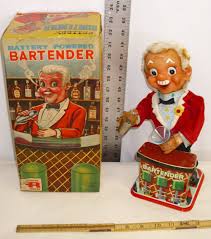
BARTENDER TIN BATTERY TOY BY ROSKO OF JAPAN 1960 B…
ebay.com · $125
VTG) 1960s Rosko The Bartender Battery Op Japan To…
ebay.com · $200
Have an antique to identify?
Get an instant AI appraisal with values, history, and market insights.
Download for iPhone