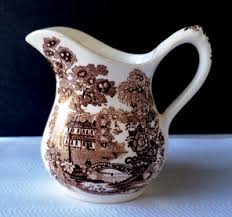
Royal Staffordshire Tonquin Creamer Value Guide
- Period
- 1920-1940
- Origin
- United Kingdom
- Materials
- Ceramic
- Category
- Royal staffordshire
The Royal Staffordshire Tonquin Creamer is a quintessential example of English transferware produced by A.J. Wilkinson Ltd. during the early 20th century. Its intricate brown landscape pattern reflects the era's fascination with idyllic pastoral scenes, making it a highly accessible yet historically significant piece for ceramic collectors.
What Is Royal Staffordshire Tonquin Creamer Worth?
The typical price range for Royal Staffordshire Tonquin Creamer is $15 - $25 based on recent sales. However, values can vary depending on the item's condition, rarity, and other factors such as:
- Condition is paramount; look for the absence of crazing, chips, or staining in the white ceramic base.
- The clarity and alignment of the brown transfer pattern significantly impact the desirability and market price.
- Market demand for specific colorways, as brown transferware is a classic but often carries a specific niche value of $15-$25.
- The presence of a clear, legible manufacturer's mark on the bottom of the creamer.
How to Identify Royal Staffordshire Tonquin Creamer?
- Look for the 'Royal Staffordshire' and 'Tonquin' backstamp on the base, often including the A.J. Wilkinson Ltd. name.
- Examine the transferware for the specific brown pigment used in the idyllic landscape scene typical of the 1920-1940 era.
- Check for the characteristic fine-grained ceramic body associated with Burslem pottery production.
- Verify the presence of the 'Made in England' mark which was standard for export pieces during this period.
History of Royal Staffordshire Tonquin Creamer
The Tonquin pattern was produced by Royal Staffordshire, a brand of A.J. Wilkinson Ltd. of Burslem, England. This transferware design, often depicting pastoral or oriental scenes, was very popular during the late 19th and early 20th centuries. The transferware technique allowed for detailed patterns to be mass-produced, making decorative ceramics accessible to a wider audience. The Tonquin pattern remains a cherished example of this era's aesthetic.
Shop Similar
Royal Staffordshire Burslem Tonquin Transferware C…
ebay.com · $15
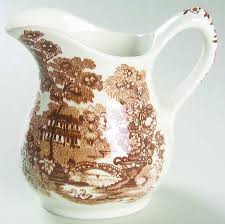
Tonquin Brown Mini Creamer by Royal Staffordshire …
replacements.com · $20
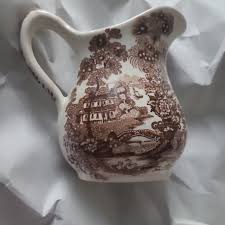
2 set Royal Staffordshire Tonquin AJ Wilkinson LTD…
ebay.com · $40
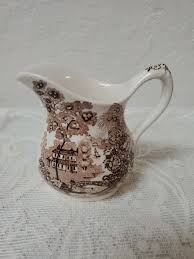
Vintage Royal Staffordshire Tonquin Brown Mini Cre…
ebay.com
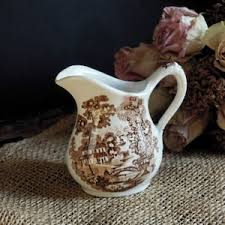
Vintage Brown Transferware Creamer Pitcher / Ewer …
etsy.com
Vintage Mason's Vista Ironstone Jug-english Brown …
etsy.com
Related Items
Have an antique to identify?
Get an instant AI appraisal with values, history, and market insights.
Download for iPhone