Teotihuacan Stone Mask Value Guide
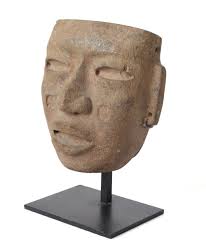
- Period
- 450-650 AD
- Origin
- Mexico
- Materials
- stone
- Category
- Mayan artifacts
This Teotihuacan stone mask represents the pinnacle of pre-Columbian craftsmanship from the Valley of Mexico during the city's peak between 450 and 650 AD. These masks are highly collectible because they served as sacred conduits to the spiritual realm, originally attached to mummy bundles or effigies rather than being worn by the living.
What Is Teotihuacan Stone Mask Worth?
The typical price range for Teotihuacan Stone Mask is $10,000 - $12,000 based on recent sales. However, values can vary depending on the item's condition, rarity, and other factors such as:
- Provenance and legal documentation are critical, as authentic Mesoamerican artifacts must comply with cultural heritage laws.
- The type of stone used and the quality of the carving, particularly the symmetry of the stylized features, significantly impact the $10,000-$12,000 valuation.
- Physical condition, including the lack of modern chips or restoration, preserves the historical integrity and market price.
- The presence of original drill holes and the smoothness of the finish reflect the skill of the ancient artisan and increase desirability.
How to Identify Teotihuacan Stone Mask?
- Look for the characteristic stylized facial features including a broad forehead, wide-set eyes, and a slightly open mouth typical of Teotihuacan aesthetics.
- Examine the stone for evidence of ancient lapidary techniques, such as drill holes at the temples or ears used for attachment to mummy bundles.
- Verify the serene, idealized expression which is a hallmark of authentic pieces from the 450-650 AD era.
- Check for specific mineral patinas or surface wear consistent with being placed in ceremonial caches or burials for over 1,500 years.
History of Teotihuacan Stone Mask
Teotihuacan, located in the Valley of Mexico, was one of the largest and most powerful cities in ancient Mesoamerica, flourishing between 100 BCE and 650 CE. These stone masks, often found in burials and ceremonial caches, were not worn by the living in the way we typically think of masks. Instead, they were likely attached to mummy bundles or effigies, serving as representations of ancestors or deities. The precise, often serene expressions suggest a connection to the spiritual realm and a profound understanding of the human form.
Shop Similar
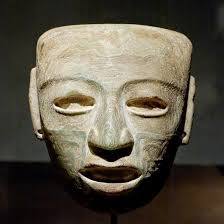
Lithic Mask from Teotihuacan' Photographic Print |…
allposters.com · $27
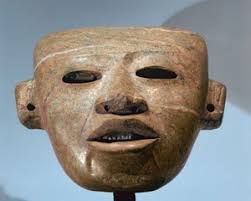
Funeral mask from Teotihuacan by Pre-Columbian
meisterdrucke.us · €116
Sold at Auction: PRE-COLUMBIAN TEOTIHUACAN STONE M…
invaluable.com · $10000
Sold at Auction: ANCIENT MESOAMERICAN OLMEC HEAD M…
invaluable.com
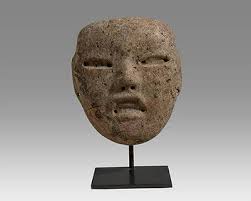
Pre Columbian Olmec Style Stone Mask
liveauctioneers.com
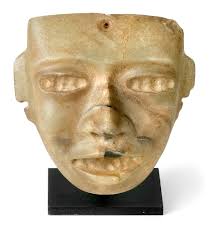
Teotihuacan Stone Mask, Classic, ca. A.D. 450-6503…
lotsearch.net
Related Items
Have an antique to identify?
Get an instant AI appraisal with values, history, and market insights.
Download for iPhone