Texaco Lubester Value Guide
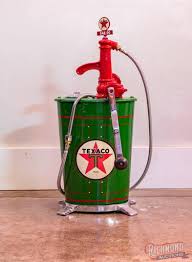
- Period
- 1930s-1950s
- Origin
- United States
- Materials
- Metal, rubber
- Category
- Lubester
The Texaco Lubester is a quintessential piece of Americana that served as a functional oil dispenser in service stations from the 1920s through the 1950s. These metal units are highly collectible today because they represent the era before pre-packaged motor oil, acting as both a mechanic's tool and a bold advertising display for the Texaco brand.
What Is Texaco Lubester Worth?
The typical price range for Texaco Lubester is $800 - $1,000 based on recent sales. However, values can vary depending on the item's condition, rarity, and other factors such as:
- Condition of the original Texaco paint and graphics, with vibrant reds and clear logos commanding the highest prices.
- Completeness of the unit, including the original pump handle, lid, and dispensing nozzle which are often missing.
- Presence of original glass sight gauges or internal components that remain in functional or restorable condition.
- Market demand for 'petroliana' items, where units valued between $800 and $1000 typically feature minimal rust and high display appeal.
How to Identify Texaco Lubester?
- Look for the prominent Texaco logo or 'The Texas Company' branding embossed or decaled on the metal body.
- Verify the presence of the original hand-crank pump mechanism and the internal metal reservoir used for bulk oil storage.
- Check for authentic 1930s-1950s construction materials, specifically heavy-gauge metal casing and original rubber hose attachments.
- Examine the base for manufacturer stamps or patent dates consistent with mid-century American automotive equipment.
History of Texaco Lubester
Lubester oil dispensers, like this Texaco branded model, were essential equipment in gasoline service stations from the 1920s through the 1950s. Before pre-packaged motor oil became standard, mechanics would pump oil directly from large barrels into vehicles. These devices, often featuring prominent branding from oil companies like Texaco, served as both functional tools and advertising displays, becoming iconic symbols of early American automotive culture.
Shop Similar
1950's Texaco Seloil Restored Oil Display Cabinet
liveauctioneers.com
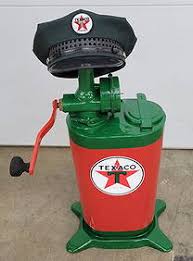
Fine Texaco Double Port Oil Lube Pump Lubester
liveauctioneers.com
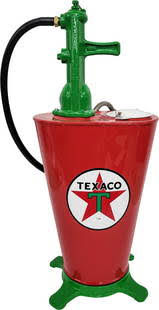
Day 2 Advertising, Automobilia, & Coin-0p 2025-09-…
liveauctioneers.com
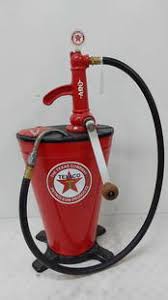
2025 Collector's Auction 2025-01-25 Auction - 571 …
liveauctioneers.com
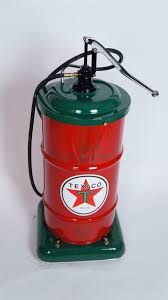
Restored beyond original 1940's-50's Texaco Oil Li…
barrett-jackson.com
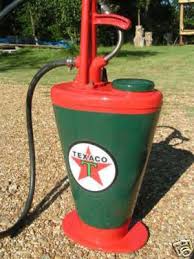
ANTIQUE Texaco HAND CRANK Gas Station Grease Oil P…
worthpoint.com
Related Items
Have an antique to identify?
Get an instant AI appraisal with values, history, and market insights.
Download for iPhone