Three-Tier Round Table Value Guide
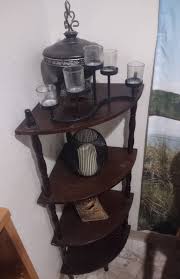
- Period
- 1930-1950
- Origin
- United States
- Materials
- Wood
- Category
- Round table
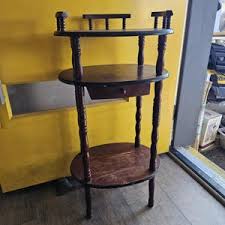
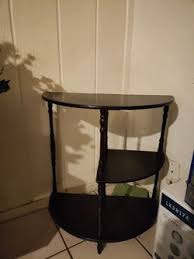
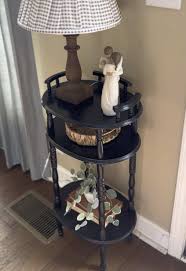
This mid-20th-century American three-tier round table represents a functional evolution of the 18th-century dumbwaiter, designed for self-service and display. Its distinctive spool-like turned legs and dark wood finish make it a quintessential example of early to mid-century craftsmanship that balances utility with decorative charm.
What Is Three-Tier Round Table Worth?
The typical price range for Three-Tier Round Table is $75 - $120 based on recent sales. However, values can vary depending on the item's condition, rarity, and other factors such as:
- The physical condition of the dark wood finish, specifically the absence of water rings or deep scratches on the top tier.
- The structural integrity of the decorative spindles and the stability of the three-tier assembly.
- Market demand for mid-century accent furniture, which typically places this piece between $75 and $120.
- Authenticity of the 1930-1950 design elements compared to later mass-produced reproductions.
How to Identify Three-Tier Round Table?
- Examine the spindle legs for specific spool-like or turned decorative elements characteristic of the 1930-1950 era.
- Verify the three-tier circular construction, ensuring the tiers are graduated or uniform in a dark-finished wood.
- Look for signs of United States manufacturing techniques from the early to mid-20th century, such as specific joinery under the tiers.
- Check for the original dark stain finish which was common for these accent pieces during the 1940s.
History of Three-Tier Round Table
Three-tier tables, also known as dumbwaiters, became popular in the 18th century as a practical piece of furniture for serving food and drinks, allowing guests to help themselves without the constant presence of servants. They evolved into decorative accent pieces in the 19th and 20th centuries, prized for their ability to display collectibles or hold household items in various rooms. This particular style, with its turned legs and spool-like elements, is indicative of early to mid-20th-century craftsmanship, offering both functionality and aesthetic appeal to a home.
Shop Similar
VINTAGE WOOD CORNER SHELF PLANT STAND SHELF UNIT 4…
ebay.com · $47
Round 3-Tier Side Table with Steel Frame - End Tab…
target.com · $58
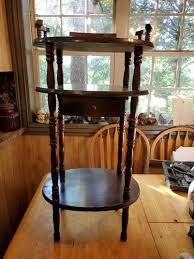
Vintage 3 Tier Accent Table W/ Drawer MCM | eBay
ebay.com
Collectible Casino Beer Mug Cup Shots 5 Inch 2pc A…
etsy.com
Moving Sunday Only Call (contact info removed) for…
offerup.com
Super simple transformation for this little table …
tiktok.com
Related Items
Have an antique to identify?
Get an instant AI appraisal with values, history, and market insights.
Download for iPhone