Turkish Kilim Pillow Value Guide

- Period
- 1950-1980
- Origin
- Turkey
- Materials
- Wool, cotton
- Category
- Turkish kilim
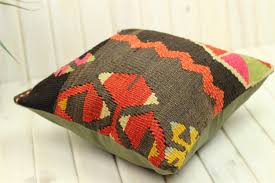
These decorative pillows are handcrafted from vintage Turkish kilim rug fragments dating between 1950 and 1980, showcasing the rich heritage of Anatolian flat-weaving. Each piece is a unique historical artifact that repurposes traditional wool and cotton textiles into functional contemporary decor, preserving symbolic floral motifs and vibrant earthy dyes.
What Is Turkish Kilim Pillow Worth?
The typical price range for Turkish Kilim Pillow is $70 - $90 based on recent sales. However, values can vary depending on the item's condition, rarity, and other factors such as:
- The complexity and preservation of the floral design, with rare or intricate patterns commanding the higher end of the $70-$90 range.
- The condition of the vintage wool, specifically looking for minimal wear, fading, or fraying on the front kilim panel.
- Color vibrancy and the harmonious use of earthy tones, which are highly sought after for modern interior design aesthetics.
- The quality of the conversion, including the durability of the backing material and the precision of the stitching used to frame the rug fragment.
How to Identify Turkish Kilim Pillow?
- Look for the characteristic flat-weave texture of authentic Turkish kilims, which lacks the pile or knots found in standard carpets.
- Examine the reverse side for a heavy cotton or linen backing, a common feature when repurposing vintage fragments into pillows.
- Identify the specific 1950-1980 era floral patterns which often utilize a mix of natural and early synthetic dyes in vibrant and earthy tones.
- Check for slight irregularities in the weave and hand-spun wool fibers, which distinguish genuine vintage fragments from modern machine-made imitations.
History of Turkish Kilim Pillow
Kilims are traditional flat-woven rugs originating from Turkey and other regions in Central Asia and the Middle East. They are known for their distinct patterns and vibrant colors, often carrying symbolic meanings. The practice of repurposing vintage kilims into decorative pillows has become popular, allowing these beautiful textiles to find new life in contemporary homes.
Shop Similar
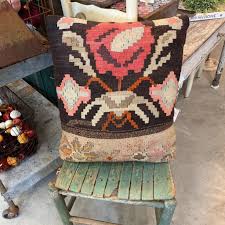
Square Turkish Rug Pillow – The Gathered Warehouse
thegatheredwarehouse.com · $78
Amelia Turkish Kilim Pillow Cover | Chairish
chairish.com · $88
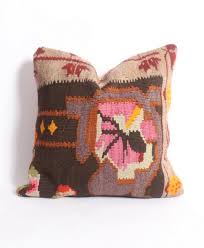
Kilim Pillow,primitive Pillow,sofa Seat Brown,shab…
etsy.com
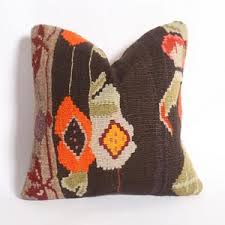
Decorative Kilim Pillow, 16x16 Turkish Kilim Pillo…
etsy.com
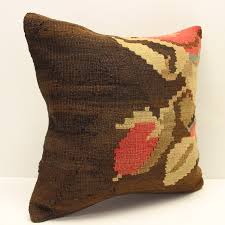
Throw Pillow Cover 20x20 Inch Decorative Pillow Li…
etsy.com
Vintage Kilim Pillow Cover: Turkish Wool, Bohemian…
etsy.com
Have an antique to identify?
Get an instant AI appraisal with values, history, and market insights.
Download for iPhone