Turkish Tea Glass and Saucer Value Guide
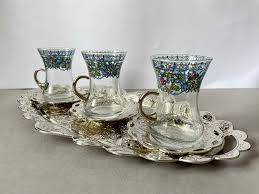
- Period
- 1950s-1970s
- Origin
- Turkey
- Materials
- Glass, Ceramic
- Category
- Turkish tea glass
The Turkish tea glass, or 'ince belli', is a cultural icon of the Ottoman Empire designed to keep tea hot while cooling at the rim. These 1950s-1970s sets are highly collectible for their fusion of functional 'thin-waisted' design and intricate Islamic or Ottoman-inspired artistry.
What Is Turkish Tea Glass and Saucer Worth?
The typical price range for Turkish Tea Glass and Saucer is $30 - $50 based on recent sales. However, values can vary depending on the item's condition, rarity, and other factors such as:
- The presence of gold or silver leaf detailing on the rim or body significantly increases the $30-$50 price point.
- Sets that retain their original matching ceramic saucers without chips or cracks command higher market prices.
- The complexity and rarity of the Ottoman-inspired patterns directly impact the desirability for collectors.
- Overall glass clarity and the absence of clouding or 'glass sickness' from improper storage.
How to Identify Turkish Tea Glass and Saucer?
- Look for the signature 'ince belli' tulip shape which narrows in the middle and flares at the top.
- Examine the glass for hand-painted or etched patterns consistent with mid-century Turkish craftsmanship.
- Verify the saucer material is ceramic, often featuring elaborate traditional motifs that match the glass detailing.
- Check for signs of age-appropriate wear on the base of the glass and the ceramic glaze of the saucer.
History of Turkish Tea Glass and Saucer
Turkish tea culture dates back to the Silk Road era, when tea was introduced to Anatolia. The distinctive tulip-shaped glass, known as 'ince belli' (thin-waisted), became popular in the Ottoman Empire. This shape is not only aesthetically pleasing but also functional, allowing the tea to stay hot longer and cool at the rim, preventing burned lips. The elaborate patterns on the glass and saucer often reflect traditional Ottoman or Islamic art.
Shop Similar
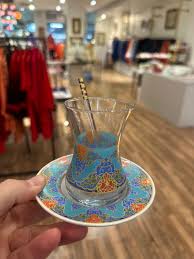
Special Design Turkish Tea Glass Set,/ - Etsy
etsy.com · $25
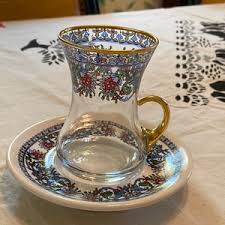
Special Design Turkish Tea Glass and Saucer, Gift …
etsy.com · $30
Turkish Tea Set of 3 | Tulip-Shaped Glasses, Sauce…
ebay.com · £47
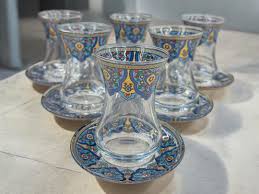
Turkısh Tea Set - Tea Cup - Handmade Tea Set - Cus…
etsy.com · $68
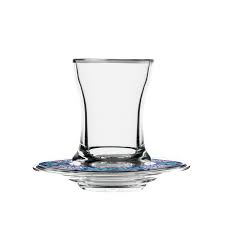
Dimlaj Melange Set of 6 Pcs Tea Cups and Saucers (…
dimlaj.com · $103
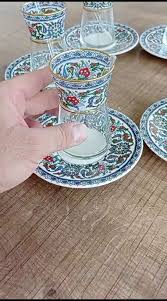
Vintage Turkish Iranian Moroccan Glass Tea Cups wi…
amazon.ae · $527
Have an antique to identify?
Get an instant AI appraisal with values, history, and market insights.
Download for iPhone