How do you identify uranium glass?

By Ellen Whitlock ·
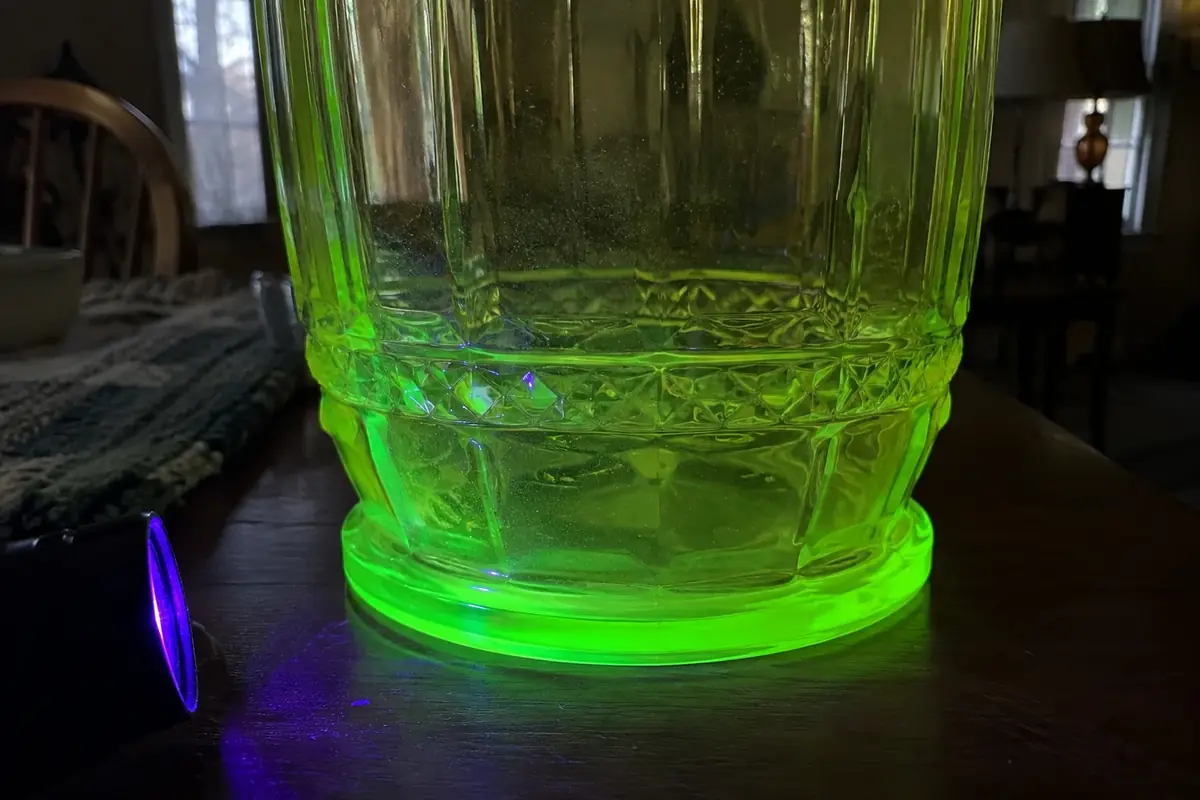
In a dark room, shine a black light (365 or 395 nm) on the glass. Uranium glass glows a bright, saturated green, not a faint shimmer. A faint, pale or patchy glow usually points to manganese glass, paint or dye instead. Everyday pieces are typically worth $10 to $50.
What is uranium glass worth?
A glow tells you what the glass is made of, not what it is worth. Uranium glass was made in large quantities over many decades, so a glow alone doesn't make a piece rare.
| Type of piece | Typical value |
|---|---|
| Everyday single piecesTumblers, small plates, and cups and saucers in good condition. | $10–$50 |
| Depression-era serving piecesBowls, butter dishes, pitchers and cake stands; auction results for serveware collections sit in this range. | $20–$150 |
| Decorative pressed piecesCruets, toothpick holders, vases and flower frogs; cruets run highest. | $30–$300 |
| Larger or ornate pieces and setsEpergnes, baskets and multi-piece sets; grouped auction lots land here. | $100–$500 |
Guide prices come from Antique Answers and Vintage Green Antiques; the auction results come from Barnebys and DuMouchelles.
Barnebys auction results for uranium glass run from $18 to $401, with most between $30 and $175.
How to tell if glass is uranium glass
Uranium glass carries no mark, so a glow tells you what the glass is, not when it was made. Josef Riedel's Bohemian factory made it from 1830 to 1848, US production stopped in 1942 for the Manhattan Project, and it restarted in 1958. You need a dark room and a black light.
Test your glass with a black light
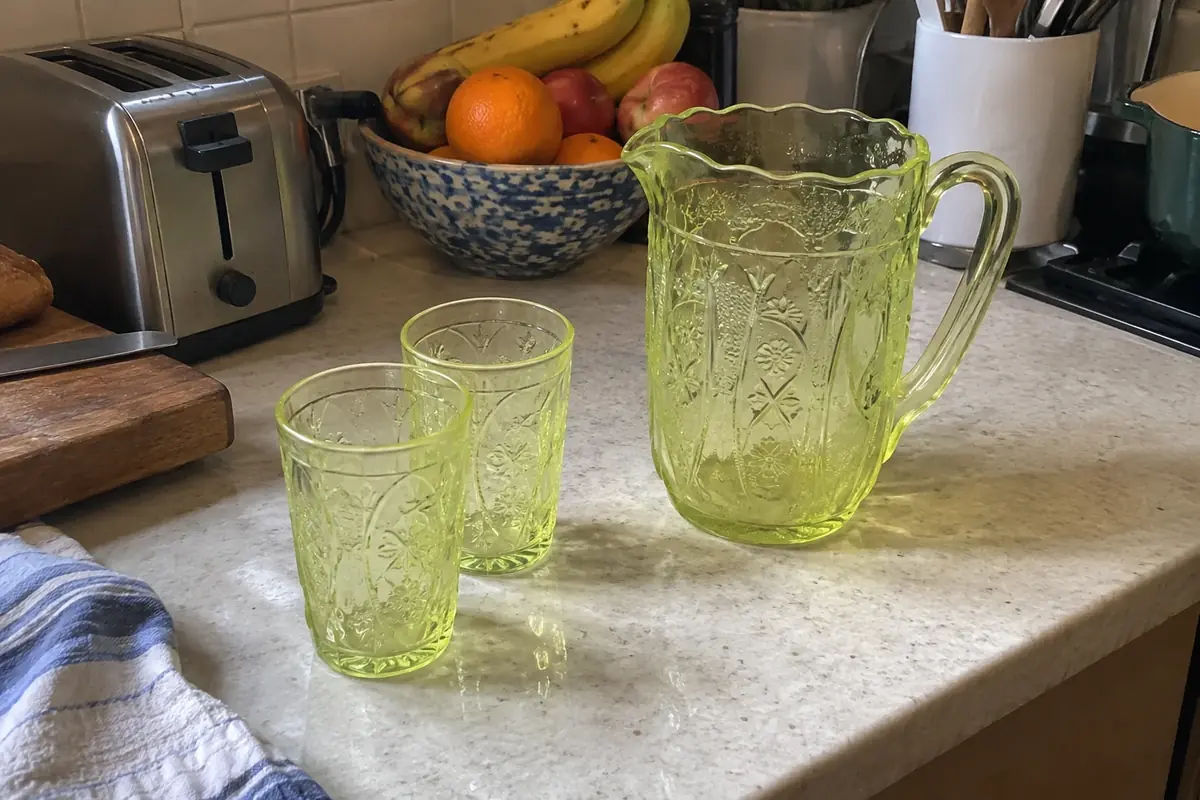
- Look at it in daylight. Vaseline glass is transparent yellow or yellow-green, custard glass is opaque milky white, and Burmese is opaque pink-white. Color alone proves nothing, because lookalikes were colored with iron, chromium or arsenic instead.
- Shine a black light on it in the dark. Use a UV flashlight; inexpensive ones are widely available.
- Judge the color and spread of the glow. Vintage Green Antiques says uranium glass glows a bright, saturated green, not a faint shimmer. Painted highlights may glow while the glass underneath contains no uranium, so check that the glow covers the whole piece.
- Watch for signs of manganese glass. It can show a weak yellow-green or a lavender or light pink glow. Clear glass that has turned purple in constant sunlight is another clue.
- If it won't glow, don't rule it out. Some uranium-containing glass doesn't fluoresce. ORAU cites a yellow glass "gemstone" that contains uranium and stays dark, and some lightly tinted clear pieces don't glow either.
What makes one piece of uranium glass worth more?
- Form and size
- Larger, ornate pieces and unusual colors such as topaz and pale yellow-green rank above everyday plates and tumblers.
- The maker
- Named makers carry a premium over unattributed pressed glass. Antique Trader lists Lalique, Fenton, Northwood and Moser among the makers behind valuable glowing glass; see Fenton glass value if you think yours is Fenton.
- Condition
- Chips, cracks and scratches cut the price, so check rims, bases and handles first. Vintage Green Antiques says chips and cracks reduce value by 50 to 80 percent and scratches by 20 to 40 percent.
- Age and style
- Pre-1930s and Art Deco pieces are typical of the valuable end, but age alone does not lift a common style.
- Sets and lots
- Matching sets and multi-piece groups reach the upper part of the range. Four grouped lots at DuMouchelles realized $300 to $500.
Is it uranium glass or a look-alike?
Several things get mistaken for uranium glass. A bright, saturated green across the whole piece is very likely the real thing. Here is what the other results usually mean:
- Faint, pale glow: most likely manganese glass, which glows softly and is not radioactive.
- Yellow-green in daylight but dark under the light: some modern glass is made in vaseline-yellow colors without uranium.
- Green Depression glass that stays dark: not all of it is uranium glass, and green pieces may be colored with iron or chromium instead. If that is your piece, see Depression glass values.
- A glow that is not green: cadmium glass glows in fiery reds, oranges and yellows, selenium glass in a softer pastel, and high-lead crystal in a blue or white shimmer.
- A weak glow, or a glow only on the decoration: newer glass with fluorescent dyes may glow less, and fluorescent paint can glow on glass with no uranium.
What is Vaseline glass?
Vaseline glass is the yellow to yellow-green kind of uranium glass, named for its likeness to petroleum jelly. The same black light test works on it. Auction houses also group iridescent uranium pieces with vaseline glass; if yours is iridescent, what carnival glass is worth may be the more useful read.
Common uranium glass questions
Which black light works best for uranium glass?
Guides differ. One favors 365 nm; another favors 395 nm, since the other can make manganese glass glow weakly.
Can I identify uranium glass without a black light?
Not reliably: color only narrows it down. A Geiger counter reads radiation directly, and a sensitive one picks up some pieces, but trace elements in clear glass can give false positives.
Is uranium glass dangerous to have at home?
The US Environmental Protection Agency says the radiation from using glassware, even canary or Vaseline glass, is unlikely to exceed background levels. ORAU's museum still says never to use it as dinnerware or drinkware, so keep yours for display, and avoid inhaling the dust from a broken piece.
How old is my uranium glass?
Its popularity peaked between the 1880s and the 1920s. After production resumed, makers switched to depleted uranium, and ORAU cites at least 4,160,000 decorative pieces made in the US from 1958 to 1978, so later pieces are plentiful.