Veeder-Root Hand Tally Counter Value Guide
- Period
- 1915-1950
- Origin
- United States
- Materials
- Metal, plastic
- Category
- Tally counter
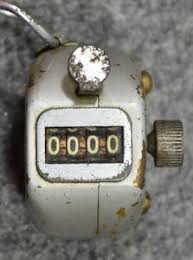
The Veeder-Root Hand Tally Counter is a quintessential example of early 20th-century American mechanical ingenuity, originating from a company that pioneered precision counting devices. These robust metal and plastic tools became indispensable for industrial inventory and scientific research following their significant 1915 design patent.
What Is Veeder-Root Hand Tally Counter Worth?
The typical price range for Veeder-Root Hand Tally Counter is $25 - $30 based on recent sales. However, values can vary depending on the item's condition, rarity, and other factors such as:
- Functional condition is paramount, as collectors value units that still provide accurate mechanical tallies without sticking.
- The presence of original paint or nickel plating significantly impacts the $25-$30 price range.
- Legibility of the number wheels, specifically the absence of yellowing or fading on the digits.
- Historical provenance or original industrial packaging can elevate the value toward the higher end of the market estimate.
How to Identify Veeder-Root Hand Tally Counter?
- Look for the specific patent date of August 10, 1915, stamped directly into the metal casing.
- Verify the 'Veeder-Root' brand name engraving, typically found near the display window or on the back plate.
- Check for the characteristic mechanical reset knob and the heavy-duty finger ring used for handheld stability.
- Examine the internal gear mechanism; authentic units feature a distinct, crisp tactile click upon every depression.
History of Veeder-Root Hand Tally Counter
Veeder-Root, a company with a rich history dating back to the late 19th century, was a pioneer in manufacturing counting devices. Their hand tally counters, like the one shown, became indispensable tools in various fields, from industrial production and inventory management to scientific research and event attendance. The patent date of August 10, 1915, often found on these models, marks a significant design improvement, making them robust and reliable for decades of use. These counters are a testament to the era's ingenuity in creating simple yet effective mechanical tools.
Shop Similar
Vintage Clicker Counter | eBay
ebay.com
OMEGA PLC Counter Modules for sale | eBay
ebay.com

Vintage Hand Held Tally Counter - Etsy
etsy.com

1915 VEEDER ROOT TALLY HAND COUNTER RAILROAD MININ…
worthpoint.com

vintage VEEDER ROOT hand tally COUNTER | #19827537
worthpoint.com

Patented 10 AUG 1915 Archives - Mark C. Grove
mgrove.com
Have an antique to identify?
Get an instant AI appraisal with values, history, and market insights.
Download for iPhone