Verner Panton S Chair Value Guide
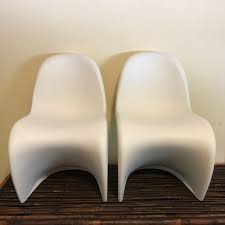
- Period
- 1960-1970
- Origin
- Denmark
- Materials
- Molded plastic
- Category
- Verner panton
The Verner Panton S Chair represents a revolutionary milestone as the first single-form injection-molded plastic chair ever produced. Designed in Denmark between 1959-1960, its cantilevered silhouette and stackable functionality made it a definitive symbol of 1960s pop art and futuristic interior design.
What Is Verner Panton S Chair Worth?
The typical price range for Verner Panton S Chair is $700 - $850 based on recent sales. However, values can vary depending on the item's condition, rarity, and other factors such as:
- The presence of the original white finish without significant yellowing or UV damage greatly preserves the $700-$850 valuation.
- Structural integrity is vital, as vintage cantilevered designs must be free of stress fractures or hairline cracks in the plastic.
- Provenance and matching sets, such as a pair, often command higher prices than individual chairs found in isolation.
- The specific production generation matters, with early Vitra-manufactured versions being highly sought after by mid-century modern collectors.
How to Identify Verner Panton S Chair?
- Check for the designer's signature, Verner Panton, which is typically embossed on the base of the chair.
- Verify the manufacturer mark, as authentic vintage examples were famously produced by Vitra starting in 1967.
- Examine the material composition; original 1960s-70s versions were made of molded plastic with a specific weight and texture consistent with early production methods.
- Inspect the underside for specific mold numbers or production dates that align with the 1960-1970 era.
History of Verner Panton S Chair
The Panton Chair was the first single-form injection-molded plastic chair ever made. Designed by Verner Panton in 1959-1960 and first manufactured by Vitra in 1967, it quickly became a sensation. Its cantilevered, stackable design and vibrant colors made it a symbol of 1960s pop art and futuristic design. It has been continually produced with various material updates, maintaining its status as a timeless piece of modern furniture.
Shop Similar
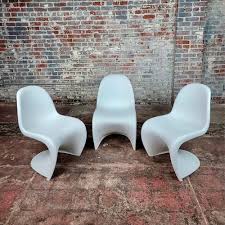
Orren Ellis Marder Stacking Side Chair Dining Chai…
wayfair.com · $470
Vintage Mid Century Modern Chairs Panton Chair Dan…
etsy.com · $695
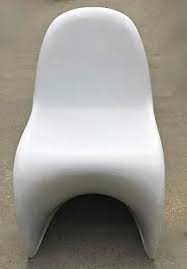
Vintage Molded Fiberglass Panton Style Chair | Cha…
chairish.com · $749
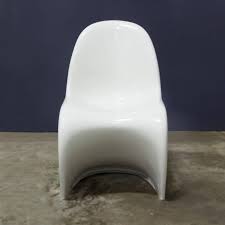
1965, Verner Panton, Stacking Chair, Herman Miller…
1stdibs.com · $1115
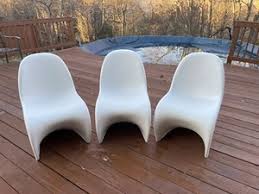
Verner Panton Chairs | eBay
ebay.com
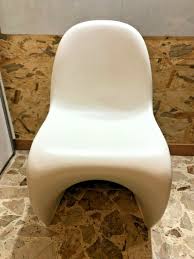
4x VITRA Panton Chair Bianche - 4 sedie originali …
ebay.com
Related Items
Have an antique to identify?
Get an instant AI appraisal with values, history, and market insights.
Download for iPhone