Vintage Bingo Card Value Guide
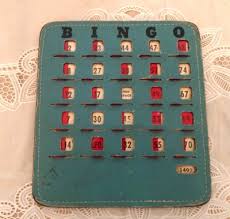
- Period
- 1950-1975
- Origin
- United States
- Materials
- cardboard, paper, plastic (sliding windows)
- Category
- Bingo card
These mid-century American bingo cards represent a nostalgic era of community fundraising and social gaming in churches and lodges. Featuring integrated plastic sliding windows, these reusable cardboard pieces eliminated the need for loose markers and standardized the modern game format.
What Is Vintage Bingo Card Worth?
The typical price range for Vintage Bingo Card is $10 - $25 based on recent sales. However, values can vary depending on the item's condition, rarity, and other factors such as:
- Mechanical functionality of the sliding windows; cards with stuck or missing shutters are less valuable.
- Visual appeal of the graphic design, including vibrant colors or specific lodge and organization branding.
- Overall physical condition, specifically the absence of water stains, fraying cardboard edges, or heavy foxing.
- Rarity of the specific layout or the presence of a complete set from a single community hall or social club.
How to Identify Vintage Bingo Card?
- Look for the 'shutter' or 'slide' mechanism made of thin plastic or metal that covers the printed numbers.
- Check for heavy-duty cardboard or multi-ply paper construction typical of the 1950-1975 production era.
- Verify the 'Made in USA' stamp or manufacturer marks from mid-century gaming supply companies on the reverse side.
- Examine the typography for authentic mid-century sans-serif or slab-serif fonts common in post-war printing.
History of Vintage Bingo Card
Bingo cards like this became popular in mid-20th century social and fundraising games. Early bingo originated from 16th–18th century European lotteries; the modern name and format were standardized in the early 20th century in the United States. Reusable cards with sliding or peel-off windows were produced from the 1940s through the 1970s for churches, lodges, and community halls to protect cards and speed play.
Shop Similar
VINTAGE GAME BINGO CARD LEATHER TYPE ON CARDBOARD …
ebay.com · $13
Bingo Shutter Cards for sale | eBay
ebay.com.sg
Bingo 2 players Vintage Manufacture Board & Tradit…
ebay.com
Regal Contemporary Manufacture Board & Traditional…
ebay.com
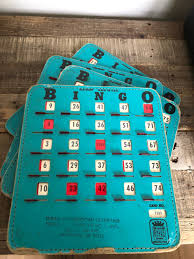
1 Vintage BINGO Card Retro Game 40/50's Movie Prop…
etsy.com
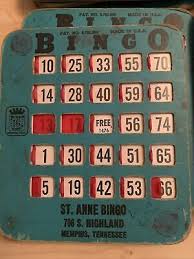
19 St. Anne Vintage bingo Number play cards reusab…
ebay.co.uk
Related Items
Have an antique to identify?
Get an instant AI appraisal with values, history, and market insights.
Download for iPhone