Vintage Brass Touch Lamp Value Guide
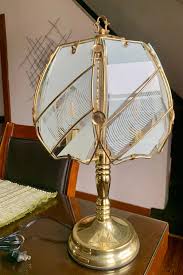
- Period
- 1980s
- Origin
- United States
- Materials
- Brass, glass
- Category
- Brass lamp
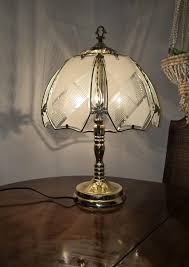
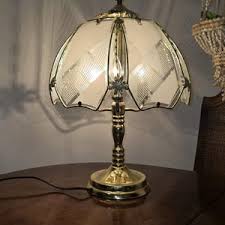
Vintage brass touch lamps from the 1980s represent a unique era of lighting innovation where traditional aesthetics met modern convenience. These specific models are highly collectible for their ornate floral brass detailing and distinctive six-paneled glass shades that diffuse light across three brightness levels.
What Is Vintage Brass Touch Lamp Worth?
The typical price range for Vintage Brass Touch Lamp is $150 - $200 based on recent sales. However, values can vary depending on the item's condition, rarity, and other factors such as:
- Functionality of the touch sensor mechanism is critical, as original 1980s sensors can fail over time.
- The condition of the glass panels is paramount; cracks or chips in the six-paneled shade significantly reduce the pair's $150-$200 valuation.
- Completeness of the set, as matching pairs of these brass lamps are more desirable to collectors than individual units.
- The preservation of the brass finish, specifically the absence of pitting or heavy oxidation on the floral decorative elements.
How to Identify Vintage Brass Touch Lamp?
- Verify the presence of the internal capacitive touch sensor by tapping any part of the brass base to cycle through light settings.
- Inspect the shade for the signature six-paneled glass construction held within a decorative floral brass framework.
- Check for the original 1980s era wiring and the specific United States manufacturing marks often found on the underside of the base.
- Look for the characteristic heavy brass plating and intricate floral motifs that define this specific 1980s design aesthetic.
History of Vintage Brass Touch Lamp
Touch lamps gained popularity in the 1970s and 1980s, offering a convenient way to adjust light levels with a simple touch to the base. These lamps often featured ornate designs, blending functional innovation with decorative aesthetics that fit well into traditional and eclectic interiors of the era. They were seen as a modern convenience, moving beyond the traditional rotary switch.
Shop Similar
Related Items
Have an antique to identify?
Get an instant AI appraisal with values, history, and market insights.
Download for iPhone