Vintage Damascene Brooch Value Guide
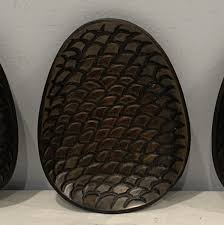
- Period
- 1950-1970
- Origin
- Spain
- Materials
- Steel, Gold, Silver
- Category
- Damascene jewelry
This vintage Damascene brooch is a prime example of 'Toledo work,' a centuries-old Spanish craft involving the meticulous inlaying of gold and silver into oxidized steel. Produced between 1950 and 1970, these pieces are highly collectible for their intricate Moorish-inspired geometric and floral 'scalework' designs.
What Is Vintage Damascene Brooch Worth?
The typical price range for Vintage Damascene Brooch is $45 - $50 based on recent sales. However, values can vary depending on the item's condition, rarity, and other factors such as:
- Condition of the oxidation: Pieces with a deep, uniform black background and no rust or pitting command the highest prices.
- Intricacy of the inlay: More complex designs featuring multiple colors of gold or silver accents are valued higher than simple patterns.
- Clarity of the hallmark: A clear 'Spain' or maker's mark helps verify the 1950-1970 origin and increases collector confidence.
- Functional hardware: The presence of a sturdy, original safety pin clasp in good working order is essential for maintaining the $45-$50 value range.
How to Identify Vintage Damascene Brooch?
- Look for the characteristic matte black oxidized steel background which provides a high-contrast base for the precious metal inlays.
- Examine the back of the brooch for 'Spain' or 'Toledo' hallmarks, which were common for export pieces during the mid-20th century.
- Verify the presence of genuine gold or silver foil hand-pressed into the steel, rather than simple gold-toned paint or surface plating.
- Check for traditional 'scalework' patterns, which feature tiny, overlapping geometric shapes or bird and floral motifs typical of Spanish artisans.
History of Vintage Damascene Brooch
Damascene art, known as Toledo work, involves the ancient craft of inlaying precious metals like gold and silver into oxidized steel. This technique originated in Damascus, Syria, but was brought to Spain during the Moorish occupation. It became a signature handicraft of Toledo, Spain, where artisans have been perfecting these geometric and floral 'scalework' designs for centuries.
Shop Similar
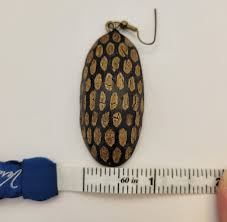
1970s Carved Nut Shell Earrings- Textured Oblong N…
etsy.com · $10
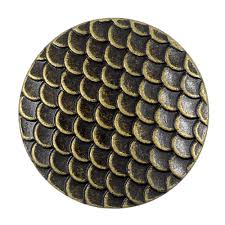
10 Pieces Antique Brass Dragon Scales Metal Shank …
etsy.com · $13
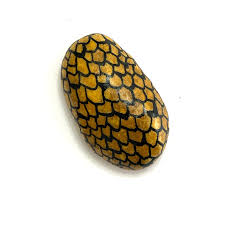
Hand Painted Brown Dragon Egg Rocks - Rock Paintin…
etsy.com · $20
Crate & Barrel Pinecone Metal Votive Holders Set o…
ebay.com · $25
Extra lightweight Gold African Big Drop Earrings –…
hmtarja.com · $45
Dragon's Egg – Wooden Wonders Workshop LLC
woodenwondersworkshop.com · $90
Related Items
Have an antique to identify?
Get an instant AI appraisal with values, history, and market insights.
Download for iPhone