Vintage Game Table Value Guide
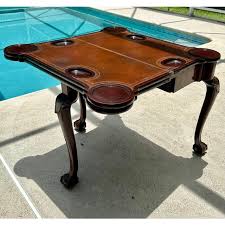
- Period
- 1940-1960
- Origin
- United States
- Materials
- Wood, leather, metal
- Category
- Game table
This mid-century American game table represents a golden era of parlor entertainment, featuring a distinctive red leather playing surface designed for card games and social gatherings. Its combination of functional durability and ornate wooden craftsmanship makes it a sought-after piece for collectors of vintage furniture and gaming history.
What Is Vintage Game Table Worth?
The typical price range for Vintage Game Table is $150 - $250 based on recent sales. However, values can vary depending on the item's condition, rarity, and other factors such as:
- Condition of the red leather surface, as tears or heavy staining significantly impact the $150-$250 price range.
- The preservation of the ornate wooden trim and the integrity of the original finish.
- Structural stability of the legs and frame, ensuring the table remains functional for modern gameplay.
- Presence of original metal accents or manufacturer labels that confirm its United States origin.
How to Identify Vintage Game Table?
- Look for the characteristic square silhouette paired with a genuine red leather inset on the tabletop.
- Examine the ornate wooden trim for specific mid-century American craftsmanship details typical of the 1940-1960 era.
- Check for metal hardware or structural supports consistent with United States manufacturing from the mid-20th century.
- Verify the wear pattern on the leather surface, which should show age-appropriate patina from card play and chip movement.
History of Vintage Game Table
Game tables have been a staple in homes for centuries, evolving from simple wooden boards to elaborate pieces of furniture. This particular style, with its rich leather top and detailed craftsmanship, speaks to a period when card games and other parlor activities were central to social gatherings. These tables were often designed to be both functional for play and aesthetically pleasing, serving as a focal point in a den or living room. The use of leather for the playing surface provided a smooth, durable area for cards and chips, while the decorative elements added a touch of elegance.
Shop Similar
English George II Period Chippendale Mahogany Ball…
chairish.com
Hillsdale Furniture Frontgate Game Table & 4 Leath…
offerup.com
Antique Table for Sale in Darlington, SC - OfferUp
offerup.com
Vintage Antique Poker Table With Hickory Furniture…
journal.pragmaticsng.org
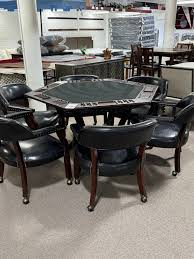
Put on your poker face and come on down and take a…
facebook.com
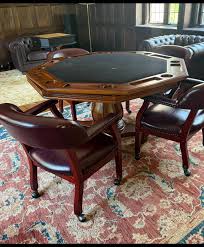
If you're in or near Purchase, New York next Frida…
instagram.com
Related Items
Have an antique to identify?
Get an instant AI appraisal with values, history, and market insights.
Download for iPhone