Waldes Truarc Applicator Value Guide
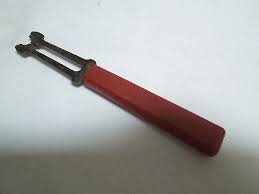
- Period
- 1940-1960
- Origin
- USA
- Materials
- Bakelite, Steel
- Category
- Waldes truarc
The Waldes Truarc Applicator is a specialized mid-century industrial tool designed by Waldes Kohinoor, Inc. for the rapid installation of E-clip retaining rings. It is highly collectible due to its association with 1940s-1960s American aerospace and automotive manufacturing history and its iconic maroon Bakelite construction.
What Is Waldes Truarc Applicator Worth?
The typical price range for Waldes Truarc Applicator is $15 - $25 based on recent sales. However, values can vary depending on the item's condition, rarity, and other factors such as:
- Condition of the Bakelite handle, as cracks, chips, or heavy fading can significantly reduce the $15-$25 market value.
- Integrity of the steel fork tip, which must be unbent and free of heavy corrosion to remain desirable to tool collectors.
- Completeness of any original industrial packaging or stamped model numbers that identify the specific ring size it was designed for.
- Provenance related to its use in specific historical sectors like the 1950s aerospace or automotive assembly lines.
How to Identify Waldes Truarc Applicator?
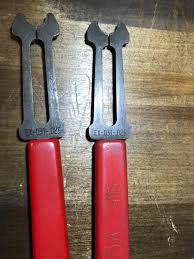
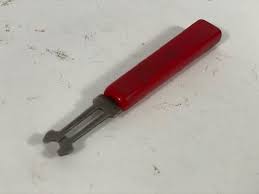
- Look for the distinct maroon-colored Bakelite handle, a signature material choice for Waldes Kohinoor tools of the era.
- Verify the presence of the fork-tipped steel blade specifically engineered to hold and seat Truarc retaining rings.
- Check for manufacturer markings indicating Waldes Kohinoor, Inc. or the 'Truarc' brand name on the steel or handle.
- Confirm the tool's origin as USA-made, consistent with mid-20th century industrial production.
History of Waldes Truarc Applicator
Manufactured by Waldes Kohinoor, Inc., this tool was specifically designed to rapidly install Truarc retaining rings, also known as E-clips, onto shafts during industrial assembly. The company, founded by the Waldes family, was a pioneer in fastener technology throughout the mid-20th century. These applicators were essential in automotive and aerospace manufacturing to ensure clips were seated without over-stressing the metal.
Shop Similar
Antique Waldes Truarc Applicator with Bakelite Han…
ebay.com
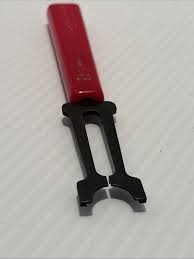
Vintage Waldes Truarc Applicator E-043-035 (74) | …
ebay.com
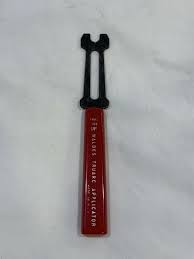
Set of 7 Waldes Truarc Applicator Retaining Snap R…
worthpoint.com
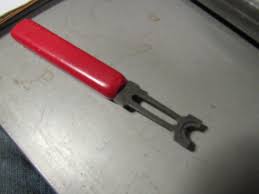
What is the purpose of this unknown tool?
facebook.com
G-Tech | PA1348 - WINDSHIELD LOCKING STRIP TOOL
artiskill.com
A-606 E - Ring Applicator For Ring De - 6 Led Stai…
consolatodelghana.it
Have an antique to identify?
Get an instant AI appraisal with values, history, and market insights.
Download for iPhone